



How Packaging Design Logistics Efficiency BC Impacts Transportation Costs
Table of Contents
ToggleIntroduction
Packaging design logistics efficiency bc has become a critical factor influencing transportation costs, warehouse performance, and overall supply chain efficiency across British Columbia. In modern distribution networks, packaging is no longer only about protecting products—it directly affects how goods move through logistics systems.
Transportation providers in BC often calculate shipping rates based on both weight and space usage. As a result, packaging that wastes space or fails to optimize dimensions can significantly increase freight expenses. Businesses that ignore dimensional efficiency may end up paying for unused cargo space in trucks, containers, or courier shipments.
British Columbia presents unique logistics challenges due to its geography and infrastructure. Goods frequently travel long distances between cities such as Vancouver, Kelowna, Kamloops, and Prince George, often crossing mountainous terrain and limited freight corridors. In this environment, logistics-optimized packaging becomes essential for controlling transportation costs and maintaining efficient distribution networks.
Well-designed packaging can also improve operational performance inside warehouses. Efficient carton structures reduce handling time, simplify palletization, and improve warehouse handling efficiency during loading and unloading processes. These improvements support broader freight optimization packaging strategies that help businesses reduce delays and increase shipping reliability.
For companies operating in manufacturing, e-commerce, or retail distribution across British Columbia, packaging decisions are directly connected to long-term logistics performance. Businesses that integrate packaging engineering into their bc shipping cost strategy gain a competitive advantage through improved supply chain efficiency driven by packaging design logistics efficiency bc.
Why Packaging Design Logistics Efficiency BC Affects Freight Pricing
The concept of packaging design logistics efficiency BC has become increasingly important for businesses operating across British Columbia’s transportation networks. Freight pricing is influenced by more than just shipment weight; carriers also consider how efficiently cargo occupies available trailer or container space. When packaging is poorly engineered or inconsistent in size, shipments consume more transport capacity than necessary, resulting in higher freight costs.
For companies shipping products between cities such as Vancouver, Surrey, Calgary, and other Western Canadian distribution hubs, improving packaging design logistics efficiency BC can directly reduce logistics expenses. Efficient packaging design ensures that products fit more effectively into pallets, trailers, and containers, maximizing cargo density and minimizing unused space.
As transportation costs continue to rise due to fuel prices, driver shortages, and infrastructure constraints, packaging design logistics efficiency BC has become a strategic factor in freight cost management rather than a purely technical packaging consideration.

The Relationship Between Packaging Structure and Freight Cost
Packaging structure plays a critical role in determining how efficiently products can be transported. The dimensions, shape, and stacking strength of packaging influence how cartons are arranged on pallets and how pallets fit within trailers.
Corrugated packaging is widely used in global logistics because it provides a strong yet lightweight structure that protects products while enabling efficient stacking and palletization during transport.
Businesses that ignore packaging design logistics efficiency BC often encounter avoidable inefficiencies. Oversized cartons, irregular shapes, or inconsistent packaging formats reduce the number of units that can be shipped in a single load. As a result, additional shipments may be required to move the same product volume.
For companies distributing products across British Columbia and Western Canada, this inefficiency can significantly increase freight frequency. Each additional shipment introduces higher transportation expenses, increased fuel consumption, and additional handling requirements.
By contrast, packaging designed with packaging design logistics efficiency BC in mind enables companies to maximize load density while maintaining product protection. Properly engineered packaging ensures cartons align with pallet dimensions and stacking patterns, allowing more units to be transported in each shipment.
Dimensional Efficiency in BC Transportation Networks
Transportation networks in British Columbia present unique logistical challenges. Long-distance freight routes, mountainous terrain, and weather variability often require careful planning to maintain reliable shipping schedules.
Because of these conditions, packaging design logistics efficiency BC becomes even more important. When packaging dimensions align with pallet standards and trailer capacity, businesses can significantly increase the amount of product shipped per load.
Dimensional efficiency improves overall transportation productivity. More products can be transported using the same equipment, reducing the number of trips required to move inventory. This optimization lowers fuel consumption, reduces labor requirements, and improves the economic efficiency of freight operations.
Companies that prioritize packaging design logistics efficiency BC often experience measurable improvements in load utilization rates. By aligning packaging dimensions with standardized pallet and trailer configurations, they can achieve better cargo density and more predictable freight planning.
Freight Optimization Packaging for Long-Distance Shipping
Many companies operating in BC distribute products across vast geographic areas. Shipments may travel from the Lower Mainland to Northern BC, Alberta, or other Western Canadian markets. In these long-distance shipping environments, inefficient packaging can quickly inflate transportation costs.
Freight optimization packaging focuses on improving packaging design logistics efficiency BC by minimizing unused cargo space while preserving structural protection. Packaging engineers evaluate carton dimensions, stacking configurations, and product orientation to ensure the highest possible load density.
For example, optimized packaging may allow a truck to carry hundreds of additional units per shipment simply by improving how products fit within each pallet layer. Over the course of a year, these improvements can generate substantial cost savings.
By integrating packaging design logistics efficiency BC into packaging development, businesses can reduce shipping frequency, improve route efficiency, and maintain more stable logistics budgets.
The Role of Packaging in BC Shipping Cost Strategy
Forward-thinking companies increasingly treat packaging design as a key component of their transportation strategy. Instead of viewing packaging as a simple material expense, organizations analyze how packaging dimensions affect freight capacity, pallet stacking, warehouse handling, and distribution efficiency.
Through this approach, packaging design logistics efficiency BC becomes a measurable operational advantage. Packaging that supports efficient palletization, stable stacking, and optimal trailer utilization allows businesses to lower per-unit shipping costs while improving supply chain performance.
Additionally, companies that invest in packaging design logistics efficiency BC often gain greater control over logistics planning. Efficient packaging supports faster loading processes, reduces handling errors, and improves warehouse throughput.
Ultimately, packaging design logistics efficiency BC connects packaging engineering directly to freight economics. Businesses that align packaging design with transportation realities can reduce operational costs, strengthen supply chain efficiency, and build a more resilient logistics strategy across British Columbia and Western Canada.
Packaging Design Logistics Efficiency BC and Dimensional Weight
The importance of packaging design logistics efficiency BC becomes particularly evident when shipping carriers apply dimensional weight pricing. In modern freight systems, many transportation providers calculate shipping costs based not only on actual package weight but also on the physical space a package occupies in a truck, container, or sorting facility.
Under dimensional weight pricing models, larger packages are charged at higher rates even if the contents are relatively light. For businesses shipping products across British Columbia and Western Canada, inefficient packaging can therefore increase logistics expenses significantly. This is why improving packaging design logistics efficiency BC has become an important strategy for companies seeking to control freight costs while maintaining safe product transport.
By optimizing packaging dimensions and structural design, businesses can reduce the volumetric footprint of shipments and ensure that transportation capacity is used more effectively.

Reducing Empty Space Through Smarter Box Design
One of the most effective ways to improve packaging design logistics efficiency BC is by minimizing unused space inside shipping cartons. Oversized packaging often creates unnecessary air gaps that require additional filler materials and reduce overall shipping efficiency.
When boxes are too large relative to the products they contain, fewer units can be loaded onto pallets or inside delivery vehicles. This inefficiency increases the number of shipments required to move inventory across distribution networks.
Smarter structural engineering focuses on designing cartons that closely match product dimensions. By aligning packaging size with product geometry, companies reduce empty space inside the box and maximize load density.
For businesses shipping across British Columbia’s long transportation routes—from the Lower Mainland to interior or northern regions—improving packaging design logistics efficiency BC through better box sizing can significantly improve freight optimization outcomes. Reduced empty space means more products per shipment, fewer truckloads, and lower transportation costs.
Warehouse Handling Improvements Through Structural Design
Efficient packaging also improves warehouse operations. When packaging is designed with consistent structural characteristics, distribution centers can handle shipments faster and more accurately.
Standardized carton dimensions and reliable stacking performance allow warehouses to process products with fewer delays. This operational benefit is another reason companies increasingly prioritize packaging design logistics efficiency BC when developing new packaging systems.
Structural features such as reinforced corners, balanced weight distribution, and consistent box dimensions improve pallet stability and reduce the risk of product damage during handling. Forklifts, pallet jacks, and automated warehouse systems operate more efficiently when packaging structures are predictable and easy to stack.
These operational improvements contribute to faster throughput in distribution centers and reduce labor requirements associated with repacking or correcting unstable pallet loads.
Pallet Configuration and Load Optimization
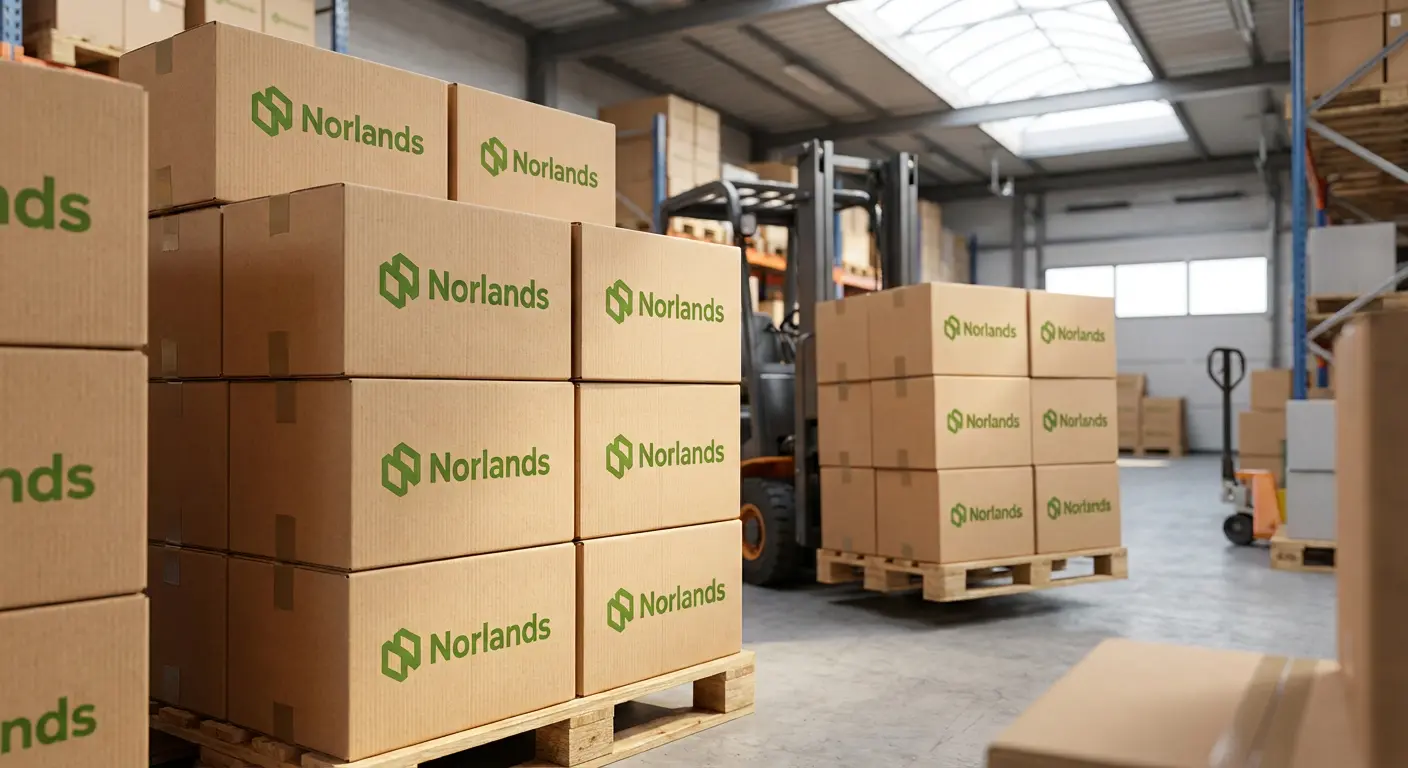
Pallet configuration is one of the most critical factors influencing transportation efficiency. Packaging dimensions determine how cartons fit together on pallets and how many pallet layers can be stacked within a trailer.
By optimizing packaging design logistics efficiency BC, companies can align carton sizes with standard pallet dimensions and trailer capacity. This alignment allows pallets to carry more units while maintaining stable load structures during transport.
Efficient palletization increases the number of products shipped per truckload, which is particularly valuable in British Columbia where long-distance freight routes are common. When pallet loads are optimized, businesses reduce the total number of shipments required to distribute goods across the region.
Improving packaging design logistics efficiency BC through better pallet configuration not only lowers freight costs but also improves shipment predictability and reduces the risk of product damage during transportation.
Dimensional Efficiency in Courier and LTL Shipping
Dimensional weight calculations are especially common in courier and LTL (less-than-truckload) shipping services. These carriers prioritize cargo space utilization because shipments from multiple customers must share limited transport capacity.
In these shipping environments, inefficient packaging can trigger dimensional weight penalties that significantly increase shipping rates. Packages that occupy excessive volume relative to their weight may be billed at higher rates even if the product itself is lightweight.
By improving carton sizing, internal structure, and packaging geometry, companies can strengthen packaging design logistics efficiency BC and reduce the likelihood of dimensional weight surcharges.
For businesses involved in e-commerce fulfillment or small-parcel distribution, optimizing packaging dimensions is one of the most effective ways to maintain competitive shipping costs.
Ultimately, packaging design logistics efficiency BC connects packaging engineering directly with transportation economics. Companies that design packaging systems with dimensional efficiency in mind can reduce shipping expenses, improve warehouse productivity, and build more efficient supply chains throughout British Columbia and Western Canada.
BC Industries That Benefit From Packaging Design Logistics Efficiency
Packaging design logistics efficiency bc provides measurable advantages for industries that rely on frequent shipping, long-distance distribution, and high-volume fulfillment across British Columbia. Businesses that integrate logistics-focused packaging design often achieve lower transportation costs, faster handling, and more predictable supply chain performance.
E-Commerce Distribution in Vancouver and the Lower Mainland
E-commerce companies operating in Vancouver, Surrey, Richmond, and surrounding areas depend heavily on efficient packaging systems. Online retailers ship thousands of individual parcels daily, making dimensional efficiency a key factor in shipping cost control.
When boxes are properly sized and structurally optimized, businesses can avoid dimensional weight penalties imposed by courier carriers. This directly supports a more effective bc shipping cost strategy, helping online retailers remain competitive while maintaining fast delivery speeds.
Food and Beverage Manufacturing Across British Columbia
Food and beverage producers shipping products from manufacturing facilities to grocery distribution centers also benefit from logistics-optimized packaging. Efficient carton design allows products to stack securely on pallets while maximizing truckload capacity.
Because many food products move through regional distribution networks across BC, Alberta, and Western Canada, improved packaging structure helps reduce freight frequency and maintain consistent shipping schedules.
Industrial Equipment and Manufacturing Supply Chains
Manufacturers shipping machinery parts, industrial components, or consumer products across British Columbia often face long transportation routes and complex freight planning. Packaging that is engineered for freight optimization packaging ensures products remain protected while maximizing load efficiency.
Improved carton dimensions and structural integrity reduce the risk of damage during transport and support smoother handling throughout distribution networks.
Consumer Goods and Retail Distribution
Retail brands distributing products through national chains or regional stores also gain advantages from efficient packaging design. When cartons are engineered to optimize palletization and warehouse flow, retailers can process shipments more quickly and reduce storage complexity.
For companies shipping goods throughout the province—from Vancouver Island to Northern BC—packaging that prioritizes logistics efficiency strengthens supply chain performance through packaging design logistics efficiency bc.
How Regional Packaging Manufacturing Reduces Supply Chain Risk in Canada
Quick question:
You might like also
Common Design Mistakes That Reduce Logistics Efficiency
Packaging design logistics efficiency bc is often reduced not by complex operational problems but by simple packaging design mistakes. When carton structure, dimensions, or material strength are poorly aligned with logistics requirements, transportation costs and warehouse inefficiencies increase quickly.
Oversized Packaging and Dimensional Weight Penalties
One of the most common issues is oversized packaging. When cartons are significantly larger than the products they contain, the unused space increases shipping volume without adding value.
Carriers frequently calculate rates using dimensional weight formulas. This means companies may pay for space rather than actual product weight. Without proper dimensional efficiency, businesses face higher freight charges and reduced load capacity in trucks and containers.
Weak Structural Design Causing Handling Issues
Structural weakness in packaging can also create logistics inefficiencies. Boxes that collapse easily or lack proper reinforcement slow down handling operations and increase product damage risk.
When cartons cannot stack safely, warehouse teams must reduce pallet height or add additional protective materials. These adjustments reduce warehouse handling efficiency and increase operational costs.
Inefficient Palletization and Warehouse Bottlenecks
Packaging dimensions that do not align with standard pallet sizes create handling complications. Irregular carton footprints lead to unstable pallet loads, wasted storage space, and slower loading operations.
These inefficiencies create operational packaging bottlenecks within distribution centers, forcing teams to reorganize shipments manually instead of using automated systems.
Ignoring Freight Optimization Packaging Principles
Some packaging designs focus primarily on branding or appearance while ignoring transportation requirements. Although visual presentation is important, ignoring freight optimization packaging principles can increase logistics costs dramatically.
Effective packaging design balances product protection, brand presentation, and transportation efficiency. Businesses that integrate logistics planning into packaging development achieve better shipping performance and stronger cost control through packaging design logistics efficiency bc.
FAQ – Packaging Design Logistics Efficiency BC
What is packaging design logistics efficiency?
Packaging design logistics efficiency refers to the process of engineering packaging structures that improve transportation, storage, and handling performance across supply chains. Instead of focusing only on product protection, this approach considers how packaging dimensions, strength, and stacking characteristics influence freight capacity, warehouse workflows, and distribution efficiency. In regions like British Columbia, where products often travel long distances, improving packaging design logistics efficiency BC helps businesses move goods more efficiently through complex logistics networks.
Why does dimensional efficiency matter in shipping?
Dimensional efficiency is important because many shipping carriers calculate freight rates based on both package size and weight. Packages that occupy excessive space inside trucks or containers may incur higher shipping charges even if the product itself is lightweight. By improving packaging design logistics efficiency BC, companies can reduce unused space inside cartons, improve load density, and avoid dimensional weight penalties. This leads to more efficient transportation and lower shipping costs across BC distribution routes.
How does packaging affect warehouse handling efficiency?
Packaging structure plays a major role in warehouse operations. Consistent carton dimensions and stable stacking performance allow distribution centers to process shipments faster and with fewer handling errors. When packaging supports efficient palletization and predictable stacking patterns, forklifts and automated systems can move products more quickly. Strengthening packaging design logistics efficiency BC therefore improves not only transportation efficiency but also warehouse productivity and throughput.
Which industries benefit most from logistics-optimized packaging?
Several industries benefit significantly from improving packaging design logistics efficiency BC. E-commerce companies rely on efficient packaging to reduce parcel shipping costs and protect products during courier delivery. Food manufacturers require packaging that maximizes pallet density while maintaining product safety. Industrial manufacturers and retail distributors also benefit from logistics-optimized packaging because it reduces transportation frequency and improves supply chain efficiency.
Can packaging design really reduce freight costs?
Yes. Properly engineered packaging can significantly reduce freight costs. When companies improve packaging design logistics efficiency BC, they increase the number of products that can be shipped per pallet or per truckload. Higher load density reduces shipment frequency, lowers fuel consumption, and improves overall logistics efficiency. In addition, optimized packaging helps businesses avoid dimensional weight charges that frequently increase shipping expenses.
Conclusion
Packaging design logistics efficiency BC plays a critical role in controlling transportation expenses and improving overall supply chain performance across British Columbia. Packaging decisions influence how products move through warehouses, trucks, and distribution networks, directly affecting freight costs, load efficiency, and operational productivity.
Businesses that invest in logistics-optimized packaging can significantly improve dimensional efficiency, reduce unused cargo space, and streamline warehouse handling processes. By aligning packaging structure with transportation requirements, organizations strengthen their freight optimization packaging strategies while improving overall logistics performance.
In a region where products often travel long distances through complex transportation corridors, companies that treat packaging as a strategic logistics asset gain measurable advantages. Through stronger packaging design logistics efficiency BC, businesses can maintain lower shipping costs, improve distribution reliability, and build a more competitive BC shipping cost strategy across the entire supply chain.