
Introduction
AI & Future Packaging is rapidly transforming how businesses design, manufacture, distribute, monitor, and optimize packaging across global supply chains. What was once considered a traditional operational function is now evolving into a highly intelligent ecosystem powered by data, automation, predictive analytics, and connected technologies. As industries continue embracing digital transformation, packaging is becoming smarter, more responsive, and increasingly capable of making decisions based on real-time information. The convergence of Artificial Intelligence, Machine Learning, Industry 4.0, and Smart Packaging technologies is creating opportunities that were unimaginable just a decade ago.
Across manufacturing, logistics, retail, e-commerce, healthcare, and food production, organizations are investing heavily in artificial intelligence in packaging to improve efficiency, reduce waste, enhance product protection, and strengthen supply chain visibility. Traditional packaging systems often relied on historical data, manual oversight, and reactive decision-making. Modern AI-powered packaging solutions, however, can analyze massive volumes of operational information, identify patterns, predict future outcomes, and continuously optimize packaging performance without waiting for problems to occur.
The rise of packaging automation, predictive packaging analytics, and packaging data analytics is fundamentally changing how companies approach packaging operations. Businesses can now forecast demand with greater accuracy, automate quality inspections, optimize packaging dimensions, improve inventory management, and reduce transportation inefficiencies using intelligent systems. At the same time, connected packaging technologies are creating entirely new customer experiences through digital interactions, real-time product tracking, and enhanced transparency throughout the supply chain.
Sustainability is another major driver behind the adoption of packaging innovation trends powered by AI. Organizations are increasingly using packaging optimization technology to minimize material usage, reduce emissions, improve recyclability, and support circular economy initiatives. These advancements are helping companies achieve environmental goals while improving operational performance and profitability.
As the packaging industry moves toward a future defined by automation, intelligence, and connectivity, businesses that embrace future packaging systems will be better positioned to adapt to changing market demands and competitive pressures. The next generation of packaging will not simply protect products—it will collect data, communicate information, optimize operations, and continuously improve performance through AI & Future Packaging.
Industry research explains that AI demand forecasting uses artificial intelligence to analyze historical data, real-time signals, and external factors to predict future demand more accurately. This directly supports AI & Future Packaging by helping businesses align packaging production, inventory planning, and supply chain decisions with changing market conditions.
What Does AI & Future Packaging Actually Mean?
AI & Future Packaging refers to the integration of Artificial Intelligence, Machine Learning, advanced automation, connected technologies, and data-driven decision-making into every stage of the packaging lifecycle. Rather than functioning as a passive container, packaging is evolving into an intelligent system capable of collecting information, adapting to changing conditions, supporting operational decisions, and improving efficiency across manufacturing, logistics, sustainability, and customer engagement.
The concept extends far beyond robotic machinery or automated packaging lines. Modern intelligent packaging systems combine predictive analytics, sensor technologies, cloud connectivity, digital monitoring, and real-time optimization tools to create packaging environments that continuously learn and improve. As organizations accelerate their digital packaging transformation, packaging is becoming a strategic source of operational intelligence rather than simply a physical product.
Today, AI can analyze production data, identify quality issues before defects occur, forecast demand fluctuations, recommend packaging design improvements, and optimize supply chain decisions with a level of speed and accuracy that traditional systems cannot match. This shift is creating new opportunities for businesses to reduce costs, increase agility, improve sustainability, and enhance customer experiences.
The Evolution from Traditional Packaging to Intelligent Systems
For decades, packaging was primarily designed around protection, transportation, storage, and branding. Decisions were often based on historical performance, industry experience, and periodic testing. While these methods remain valuable, they are increasingly being supplemented by intelligent technologies capable of processing vast amounts of operational information in real time.
Traditional packaging systems were largely static. Once a packaging design was approved and implemented, changes typically occurred only when major problems emerged or periodic reviews were conducted. In contrast, modern smart packaging technology enables continuous monitoring and ongoing optimization. Sensors, RFID tags, QR-enabled solutions, and connected platforms provide visibility into product movement, environmental conditions, and consumer interactions throughout the supply chain.
This transition is creating packaging ecosystems that can adapt more quickly to market demands, operational challenges, and sustainability requirements. Businesses no longer need to rely exclusively on historical trends because intelligent systems can identify emerging patterns and recommend improvements proactively.
Why AI Is Becoming a Competitive Advantage

Organizations across industries are increasingly viewing artificial intelligence in packaging as a competitive differentiator rather than simply a technology investment. Markets are becoming more complex, customer expectations continue to rise, and supply chains face growing uncertainty. Businesses that can process information faster and make better decisions gain significant advantages over competitors relying on slower, manual processes.
AI allows companies to uncover insights hidden within large datasets that would be difficult or impossible for human teams to identify consistently. Through advanced analytics, organizations can improve production efficiency, reduce material waste, optimize transportation planning, and enhance customer satisfaction. These capabilities contribute directly to stronger profitability and operational resilience.
In highly competitive sectors such as e-commerce, food manufacturing, pharmaceuticals, and industrial production, even small improvements in packaging performance can generate substantial financial benefits when scaled across large operations. AI accelerates these improvements by providing continuous optimization opportunities rather than periodic adjustments.
The Shift from Reactive Packaging to Predictive Packaging
Perhaps the most significant transformation occurring within future packaging systems is the move from reactive management to predictive decision-making. Traditional packaging operations often respond to problems after they occur. Damage rates increase, inventory shortages emerge, production inefficiencies develop, or transportation costs rise before corrective action is taken.
Modern predictive packaging analytics changes this model entirely. AI-driven systems analyze historical data, current conditions, supplier performance, production trends, customer demand patterns, and logistics information to anticipate future outcomes before disruptions occur. Businesses can forecast packaging requirements, identify supply chain risks, predict equipment maintenance needs, and optimize inventory levels proactively.
This predictive capability allows organizations to prevent problems instead of simply responding to them. The result is greater operational stability, improved resource utilization, lower costs, and stronger overall business performance.
As AI capabilities continue to advance, predictive packaging will become increasingly sophisticated, enabling businesses to make faster, smarter, and more accurate decisions across every aspect of packaging operations.
How AI & Future Packaging Is Transforming Manufacturing Operations
The manufacturing environment is undergoing one of the most significant technological shifts in its history, and AI & Future Packaging is at the center of that transformation. Modern packaging facilities are evolving from production-focused operations into intelligent manufacturing ecosystems powered by Artificial Intelligence, Machine Learning, automation technologies, and real-time analytics. These advancements are helping businesses improve productivity, reduce waste, strengthen quality control, and create more agile production environments capable of adapting to changing market conditions.
Traditionally, packaging manufacturing relied heavily on manual oversight, fixed production schedules, periodic inspections, and reactive maintenance practices. While these approaches supported operational stability for many years, they often struggled to keep pace with increasingly complex supply chains and rapidly changing customer expectations. Today, packaging industry 4.0 initiatives are enabling manufacturers to use data as a strategic asset, allowing packaging operations to become faster, smarter, and more efficient.
The combination of AI-powered packaging solutions, advanced automation, and packaging data analytics is fundamentally changing how facilities plan production, monitor quality, allocate resources, and manage equipment performance. Rather than simply producing packaging materials, modern facilities are continuously optimizing operations through intelligent decision-making systems.
AI-Driven Production Planning
One of the most impactful applications of artificial intelligence in packaging is production planning. Packaging manufacturers often manage hundreds or thousands of product variations, customer requirements, material specifications, and production schedules simultaneously. Coordinating these variables manually can be complex and time-consuming.
AI-driven systems analyze historical production data, customer demand forecasts, machine capacity, material availability, labor resources, and supply chain conditions to generate optimized production schedules. These systems can identify bottlenecks, balance workloads, prioritize urgent orders, and improve resource allocation more effectively than traditional planning methods.
As a result, manufacturers can improve throughput, reduce downtime, minimize scheduling conflicts, and respond more quickly to changing customer requirements. This level of planning agility is becoming increasingly important as markets demand faster turnaround times and greater customization.
Reducing Packaging Waste Through Automation
Waste reduction is a major objective for both financial and sustainability reasons, and packaging automation is playing a critical role in achieving that goal. AI-powered systems can monitor material usage patterns, identify inefficiencies, and recommend process adjustments that minimize waste throughout production.
Rather than relying solely on operator observations, intelligent systems continuously analyze production performance and detect opportunities to improve material utilization. Packaging dimensions, cutting patterns, printing processes, and assembly operations can all be optimized to reduce scrap generation and improve yield rates.
These improvements not only lower material costs but also support environmental initiatives by reducing resource consumption and waste generation. As sustainability becomes a greater priority for businesses worldwide, waste reduction through automation is becoming a key driver of packaging innovation.
Real-Time Quality Control Systems
Quality control has traditionally depended on periodic inspections and manual sampling processes. While effective to a degree, these approaches may not detect every issue before products reach customers. AI is transforming quality management by enabling continuous monitoring and real-time defect detection.
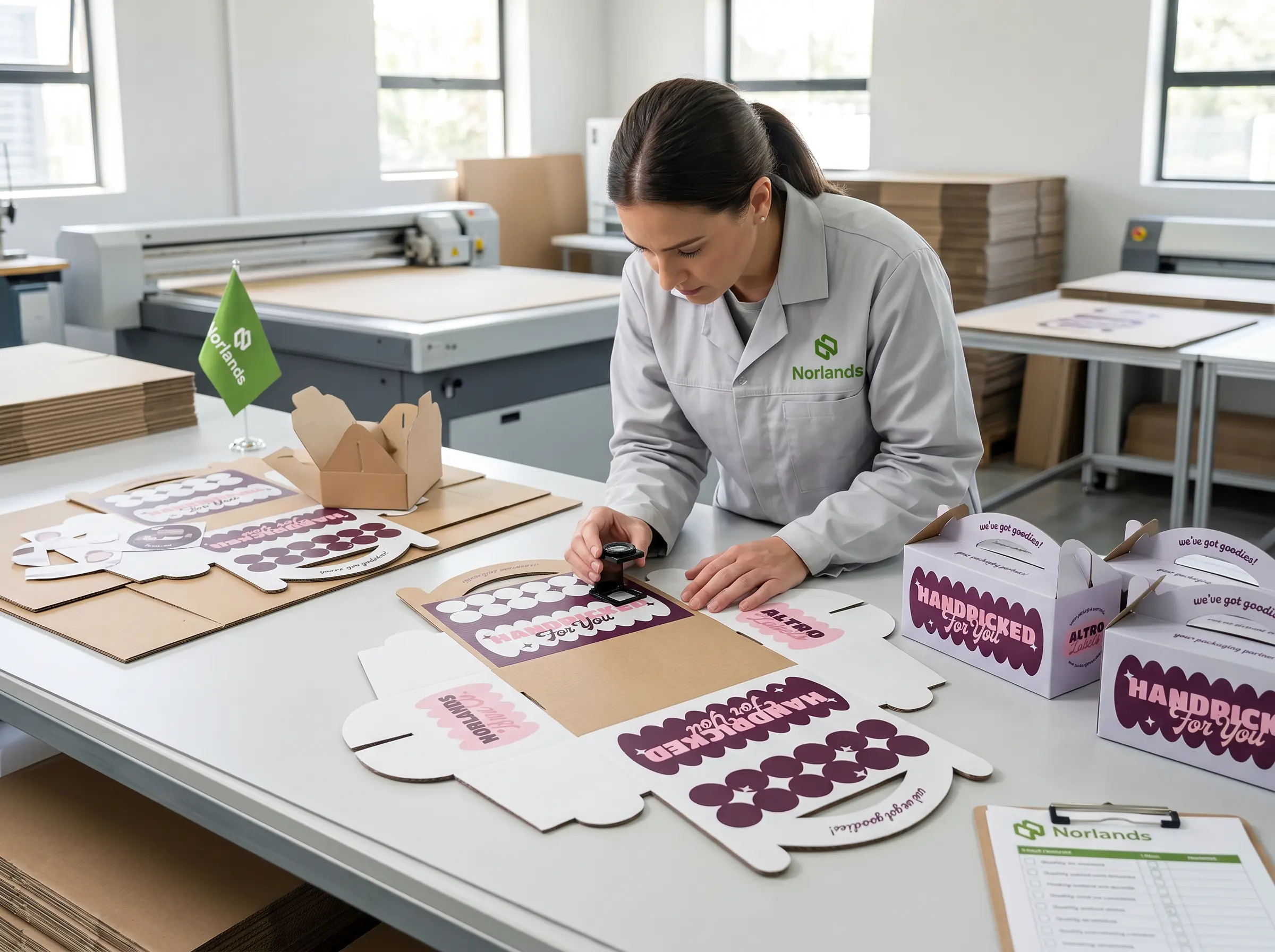
Advanced vision systems powered by Machine Learning can inspect packaging components at high speeds, identifying printing errors, structural defects, dimensional inconsistencies, color variations, and other quality issues that might be difficult for human inspectors to detect consistently. These systems learn over time, improving accuracy and reducing false positives.
Real-time quality control allows manufacturers to identify problems immediately, preventing defective products from moving further through the production process. This improves product consistency, reduces rework costs, and strengthens customer confidence in packaging performance.
Predictive Maintenance in Packaging Facilities
Equipment reliability is essential for maintaining production efficiency, and predictive maintenance has emerged as one of the most valuable applications of AI in manufacturing. Traditional maintenance programs often follow fixed schedules or respond to equipment failures after they occur. Both approaches can lead to unnecessary downtime, increased repair costs, and operational disruptions.
Through packaging optimization technology, AI systems continuously monitor machine performance using sensors and operational data. These systems can identify subtle indicators of wear, performance degradation, or potential failure long before equipment breaks down.
Predictive maintenance enables manufacturers to schedule repairs proactively, reducing unexpected downtime and extending equipment lifespan. Facilities benefit from improved operational reliability, lower maintenance costs, and more consistent production performance.
As AI capabilities continue advancing, manufacturing operations will become increasingly autonomous, adaptive, and efficient. The integration of intelligent technologies into production environments is not only improving performance today—it is establishing the foundation for the next generation of future packaging systems.
AI & Future Packaging in Supply Chain and Logistics Management
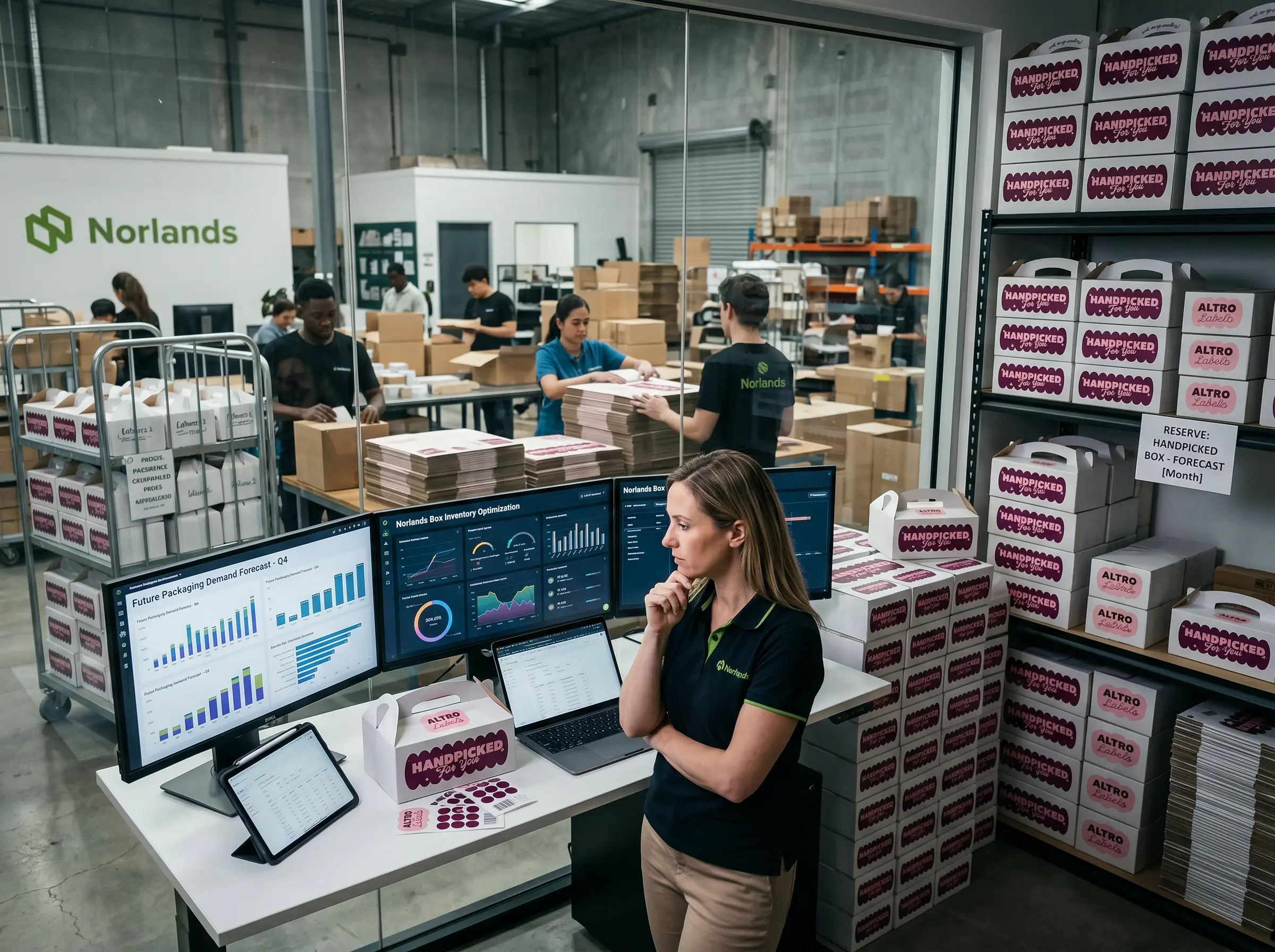
The impact of AI & Future Packaging extends far beyond manufacturing facilities. Some of the most significant advancements are occurring throughout supply chain and logistics operations, where intelligent technologies are helping businesses improve forecasting accuracy, optimize inventory levels, increase transportation efficiency, and gain unprecedented visibility into product movement. As supply chains become more global, interconnected, and data-driven, AI is emerging as a critical tool for managing complexity and reducing operational uncertainty.
Traditional supply chain management often relied on historical trends, manual planning processes, and reactive decision-making. While these methods provided a foundation for logistics operations, they frequently struggled to adapt quickly to sudden changes in demand, transportation disruptions, supplier delays, or shifting market conditions. Today, AI-driven supply chain management enables organizations to process enormous amounts of information in real time and make more informed decisions across the entire packaging ecosystem.
Through advanced packaging data analytics, businesses can predict future demand patterns, optimize inventory placement, improve transportation planning, and respond proactively to emerging risks. These capabilities are helping organizations create more resilient, efficient, and customer-focused supply chains.
AI-Powered Demand Forecasting
AI & Future Packaging is transforming demand forecasting from a reactive planning process into a predictive, data-driven system. Accurate forecasting has always been one of the most difficult challenges in packaging and supply chain management. When demand is underestimated, businesses may face packaging shortages, production delays, missed sales opportunities, and customer dissatisfaction. When demand is overestimated, companies may carry excess packaging inventory, increase storage costs, and generate unnecessary waste. With AI & Future Packaging, businesses can improve forecasting accuracy by analyzing large volumes of data from multiple sources. These may include historical sales patterns, seasonal trends, customer purchasing behavior, marketing activity, supplier performance, economic indicators, and external market conditions. Unlike traditional forecasting models, AI & Future Packaging systems continuously update predictions as new data becomes available. This dynamic forecasting capability allows companies to align packaging production, procurement, and inventory planning more closely with real market demand. Through AI & Future Packaging, organizations can reduce uncertainty, improve service levels, lower costs, and respond faster to changing market conditions. As supply chains become more complex, AI & Future Packaging gives businesses the ability to plan ahead with greater confidence and operational agility.Inventory Optimization Through Machine Learning
AI & Future Packaging also plays a major role in improving inventory optimization. As businesses grow, product portfolios expand, and supply chains become more interconnected, maintaining the right balance between packaging availability and cost efficiency becomes increasingly difficult. Through AI & Future Packaging, machine learning systems can analyze packaging consumption patterns, supplier lead times, demand variability, warehouse capacity, and inventory turnover rates. These systems can identify when stock levels are too high, when shortages may occur, and when replenishment should be triggered. By using AI & Future Packaging for inventory planning, businesses can reduce excess packaging inventory, prevent stockouts, improve cash flow, and strengthen supply chain resilience. Instead of making inventory decisions based on assumptions, teams can rely on intelligent recommendations supported by real operational data. This makes AI & Future Packaging especially valuable for companies managing high-volume packaging operations, seasonal demand shifts, or complex supplier networks.How Packaging Inventory Optimization Canada Improves Efficiency
Quick question:
You might also like..
Packaging Decisions Based on Logistics Data
One of the most important advantages of AI & Future Packaging is the ability to make packaging decisions based on real-world logistics data. Traditionally, packaging design decisions were often made separately from transportation and distribution planning. This sometimes resulted in packaging that protected products well but created inefficiencies in shipping, storage, or fulfillment. AI & Future Packaging changes this approach by connecting packaging design with logistics performance. AI systems can analyze transportation routes, handling conditions, shipment frequency, warehouse constraints, vehicle utilization, and delivery requirements to recommend packaging configurations that improve both protection and efficiency. Through AI & Future Packaging, businesses can optimize packaging dimensions to maximize trailer capacity, reduce dimensional weight, lower shipping costs, and minimize carbon emissions. Material selection can also be improved based on actual shipping conditions, helping companies balance durability, sustainability, and cost control. This data-driven approach allows AI & Future Packaging to turn packaging into a strategic logistics tool rather than a standalone design decision.Real-Time Shipment Visibility
Real-time visibility is another major benefit of AI & Future Packaging. Modern supply chains require businesses to know where products are, what conditions they are experiencing, and whether any disruptions may affect delivery performance. AI & Future Packaging supports this visibility through connected packaging technologies such as sensors, RFID systems, IoT devices, and cloud-based monitoring platforms. These tools provide real-time information about shipment location, temperature, humidity, shock exposure, and handling conditions. AI systems can analyze this data continuously and detect unusual patterns or potential risks. If a shipment is delayed, exposed to unsafe temperatures, or handled incorrectly, AI & Future Packaging systems can generate alerts that allow businesses to respond quickly. This improves customer communication, reduces risk, and strengthens supply chain reliability. Through AI & Future Packaging, businesses move from reactive problem-solving to proactive shipment management.How AI & Future Packaging Improves Packaging Design
AI & Future Packaging is also redefining how packaging design is created, tested, and optimized. Traditional packaging design has often depended on engineering experience, manual testing, trial and error, and customer requirements. While these elements remain important, AI & Future Packaging adds a new layer of intelligence to the process. With AI & Future Packaging, businesses can generate design concepts, simulate performance outcomes, optimize material usage, and improve packaging efficiency before physical prototypes are produced. This reduces development time, lowers testing costs, and helps companies bring better packaging solutions to market faster. This shift represents one of the most important developments in digital packaging transformation. AI & Future Packaging turns packaging design into a predictive, data-driven process supported by real-world performance insights, logistics data, sustainability goals, and advanced analytics.AI-Generated Packaging Concepts
One of the most promising applications of AI & Future Packaging is AI-generated packaging concept development. Instead of beginning every project from scratch, businesses can use AI systems to analyze product dimensions, weight, fragility, shipping requirements, sustainability goals, branding needs, and historical performance data. Based on these inputs, AI & Future Packaging systems can suggest multiple packaging design alternatives within minutes. These concepts can then be reviewed and refined by packaging engineers, designers, and operations teams. AI & Future Packaging does not replace human creativity. Instead, it supports the design process by expanding the range of possible solutions and helping teams identify options that may not have been considered through traditional methods. As machine learning models improve, AI & Future Packaging will continue making design development faster, smarter, and more efficient.Performance-Based Packaging Design
AI & Future Packaging also improves performance-based packaging design. Traditional development often requires repeated rounds of physical prototypes and testing before teams understand how a package will perform under real-world conditions. With AI & Future Packaging, businesses can use simulations and predictive packaging analytics to evaluate performance earlier in the design process. AI can model compression strength, impact resistance, vibration exposure, stacking pressure, material behavior, and environmental stress. This helps businesses identify weaknesses before physical testing begins. Through AI & Future Packaging, companies can reduce design errors, shorten testing cycles, lower development costs, and improve confidence in final packaging structures. Performance-based design supported by AI & Future Packaging allows businesses to create packaging that is both efficient and reliable.Optimizing Packaging Dimensions for Transportation
Transportation efficiency is one of the strongest areas where AI & Future Packaging creates measurable value. Every unnecessary centimeter in packaging size can increase shipping costs, reduce warehouse efficiency, limit pallet utilization, and increase environmental impact. AI & Future Packaging uses logistics data to recommend packaging dimensions that improve space utilization across warehouses, pallets, trucks, and delivery networks. These systems can evaluate shipment volumes, pallet configurations, warehouse constraints, and distribution routes to identify the most efficient packaging dimensions. By optimizing packaging size, AI & Future Packaging helps businesses reduce freight costs, improve trailer utilization, lower fuel consumption, and reduce carbon emissions. For companies shipping large volumes of products, even small dimensional improvements through AI & Future Packaging can produce significant long-term savings.Data-Driven Packaging Material Selection
AI & Future Packaging also improves material selection by helping businesses compare packaging materials based on cost, strength, sustainability, availability, weight, recyclability, and lifecycle impact. Using packaging data analytics, AI & Future Packaging systems can identify materials that provide the best balance between product protection, environmental responsibility, and operational efficiency. This is especially valuable as businesses pursue sustainable packaging goals. Instead of relying on assumptions about which material is better, AI & Future Packaging allows organizations to evaluate material choices using objective data. Companies can compare durability, carbon footprint, transportation impact, and lifecycle cost before selecting materials. This makes AI & Future Packaging a powerful tool for building smarter, more sustainable packaging systems.Conclusion
AI & Future Packaging is transforming packaging from a traditional operational function into an intelligent, predictive, and data-driven business system. From demand forecasting and inventory optimization to logistics planning, real-time visibility, packaging design, and material selection, AI & Future Packaging helps businesses make smarter decisions across the entire packaging lifecycle. Organizations that invest in AI & Future Packaging gain stronger visibility, improved efficiency, better cost control, and greater supply chain resilience. As digital packaging transformation continues to accelerate, AI & Future Packaging will become an essential part of how businesses design, manage, and optimize packaging for the future.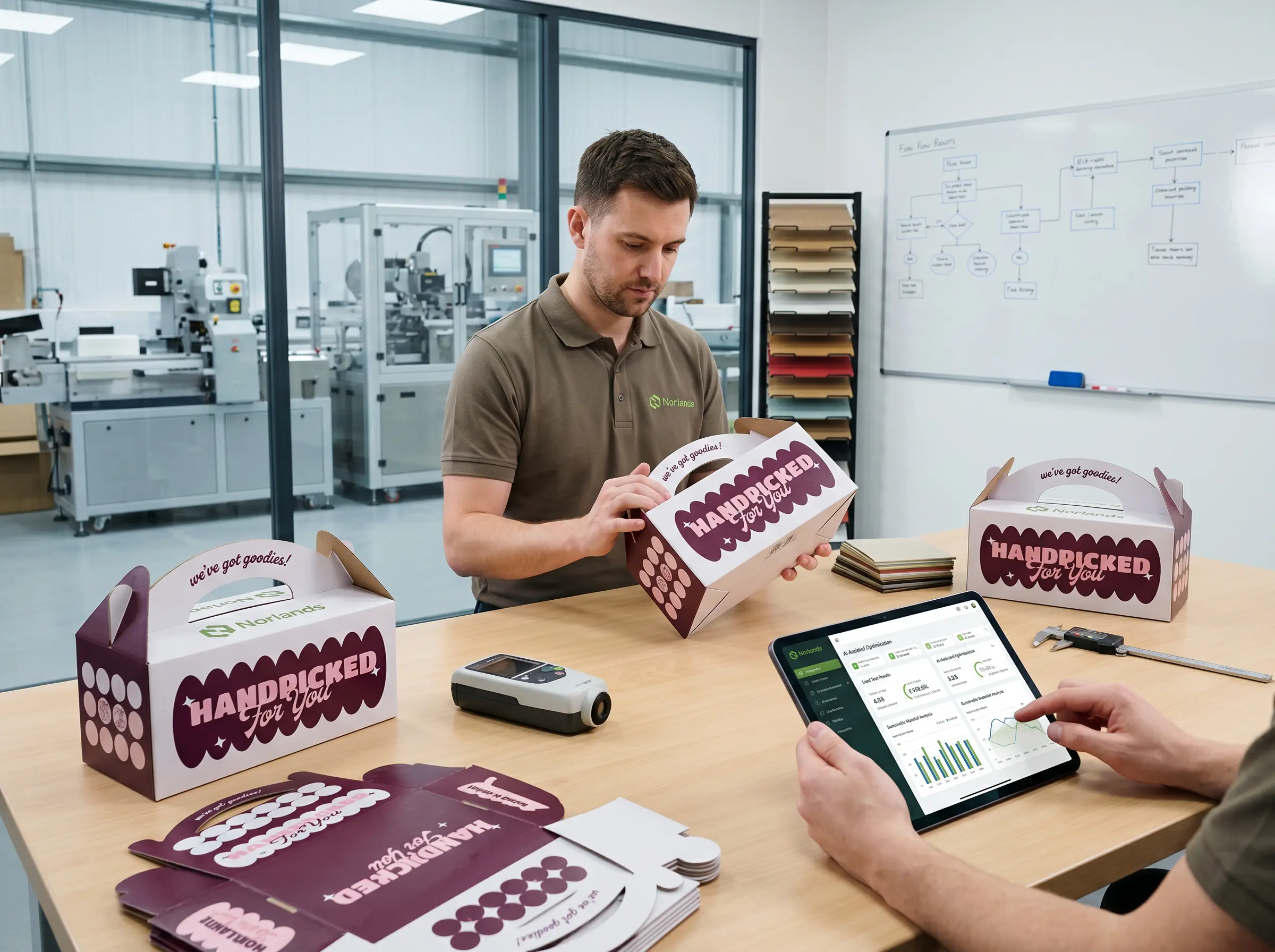
The Role of Smart Packaging in the Future of Packaging
As AI & Future Packaging continues to evolve, one of the most transformative developments is the rise of Smart Packaging. Traditional packaging has historically served a limited number of functions: protecting products, facilitating transportation, supporting branding, and providing basic product information. Smart Packaging expands these capabilities dramatically by turning packaging into an active participant within the product lifecycle, capable of collecting data, communicating information, monitoring conditions, and interacting directly with consumers.
The convergence of Smart Packaging, Artificial Intelligence, IoT technologies, cloud computing, and connected devices is creating packaging systems that are no longer passive containers but intelligent communication platforms. These innovations are helping businesses improve supply chain visibility, strengthen product security, enhance customer engagement, and generate valuable operational insights.
As industries embrace connected packaging technologies, packaging is becoming a bridge between physical products and digital ecosystems. This transformation is expected to play a major role in shaping the future of manufacturing, logistics, retail, healthcare, and consumer goods over the coming decade.
QR-Enabled Packaging
QR codes have evolved far beyond simple website links. Modern QR-enabled packaging serves as a gateway to dynamic digital experiences that can provide product information, sustainability details, usage instructions, authentication verification, and personalized customer engagement opportunities.
When integrated with AI-powered packaging solutions, QR codes can deliver tailored content based on customer location, purchasing behavior, product type, or market conditions. Businesses can update information in real time without changing the physical packaging itself, creating a flexible communication channel that extends well beyond the point of sale.
For consumers, this means greater transparency and access to information. For businesses, it creates new opportunities to gather insights, improve engagement, and strengthen brand relationships.
Connected Customer Experiences
One of the most exciting aspects of connected packaging is its ability to create interactive customer experiences. Packaging is increasingly becoming a digital touchpoint that extends the relationship between brands and consumers beyond the initial purchase.
Through mobile applications, NFC technology, QR integrations, and cloud-connected platforms, customers can access product tutorials, loyalty programs, sustainability information, warranty registration systems, and personalized recommendations directly from the packaging itself.
AI enhances these experiences by analyzing user interactions and delivering more relevant content over time. This level of personalization helps brands build stronger customer relationships while generating valuable data regarding consumer preferences and behaviors.
As digital engagement becomes more important across industries, connected customer experiences will become a major differentiator for businesses seeking to improve brand loyalty and customer satisfaction.
Track-and-Trace Technologies
Visibility has become one of the most valuable assets in modern supply chains, and Smart Packaging is helping organizations achieve unprecedented levels of transparency. Track-and-trace technologies allow businesses to monitor products throughout their journey from manufacturing facilities to end users.
Using RFID tags, IoT sensors, GPS tracking systems, and cloud-based monitoring platforms, organizations can gain real-time visibility into product movement, location, handling conditions, and delivery performance. Combined with AI-driven supply chain management, these technologies enable proactive risk management and faster decision-making.
Businesses can quickly identify delays, investigate disruptions, improve logistics performance, and enhance customer communication. For industries such as pharmaceuticals, food and beverage, and high-value consumer products, track-and-trace capabilities also support regulatory compliance and product authenticity verification.
Real-Time Product Monitoring
Perhaps one of the most advanced applications of Smart Packaging is real-time product monitoring. Packaging can now be equipped with sensors capable of measuring temperature, humidity, vibration, shock exposure, freshness indicators, tampering events, and other environmental conditions.
This capability is especially valuable for sensitive products such as pharmaceuticals, medical devices, food products, and specialty chemicals. Real-time monitoring helps ensure products remain within acceptable conditions throughout transportation and storage.
When combined with Artificial Intelligence, monitoring systems can analyze environmental data continuously and generate alerts when conditions exceed acceptable thresholds. Businesses can respond proactively before product quality is compromised, reducing waste, improving safety, and protecting customer trust.
As sensor technologies become more affordable and AI capabilities continue advancing, real-time monitoring is expected to become a standard component of many future packaging systems. These intelligent packaging ecosystems will provide businesses with deeper operational insights while creating safer, more transparent, and more connected supply chains.
Smart Packaging represents a fundamental shift in how organizations think about packaging. Rather than serving as a passive protective layer, packaging is becoming an intelligent platform capable of generating value across manufacturing, logistics, sustainability, and customer engagement. This evolution will play a central role in shaping the future of the packaging industry.
Frequently Asked Questions (FAQ)
What is AI & Future Packaging?
AI & Future Packaging refers to the use of artificial intelligence, automation, predictive analytics, and smart technologies to improve packaging design, manufacturing, logistics, sustainability, and customer engagement.
How is AI used in packaging?
AI is used to forecast demand, optimize packaging designs, automate quality inspections, improve inventory management, reduce waste, enhance supply chain visibility, and support data-driven decision-making.
What are the benefits of AI & Future Packaging?
Key benefits include lower operational costs, improved efficiency, enhanced sustainability performance, better customer experiences, increased supply chain visibility, and stronger business agility.
Can AI improve packaging sustainability?
Yes. AI helps reduce excess material usage, optimize transportation efficiency, lower carbon emissions, improve recycling processes, and support circular economy initiatives through data-driven optimization.
Which industries benefit most from AI & Future Packaging?
Industries leading adoption include e-commerce, manufacturing, food and beverage, healthcare, pharmaceuticals, logistics, consumer goods, and industrial packaging sectors.
Is AI replacing packaging professionals?
No. AI is designed to support packaging professionals by automating repetitive tasks, providing analytical insights, and improving decision-making. Human expertise remains essential for strategy, innovation, and oversight.
What is smart packaging?
Smart Packaging uses technologies such as QR codes, RFID, IoT sensors, NFC tags, and connected platforms to provide real-time information, product tracking, customer engagement, and enhanced supply chain visibility.
How does AI affect packaging costs?
AI can reduce packaging costs through better forecasting, improved material utilization, optimized package dimensions, lower transportation expenses, reduced waste, and increased operational efficiency.
What challenges exist when implementing AI in packaging?
Common challenges include technology investment requirements, data quality limitations, integration complexity, cybersecurity concerns, workforce training needs, and change management requirements.
What is the future of AI in packaging?
The future includes autonomous packaging systems, self-optimizing supply chains, intelligent sustainability management, advanced predictive analytics, connected packaging ecosystems, and fully integrated Industry 4.0 operations.
Conclusion

AI & Future Packaging is no longer a concept reserved for future innovation—it is actively transforming the packaging industry today. Across manufacturing, logistics, sustainability, product development, and customer engagement, Artificial Intelligence is creating smarter systems capable of making faster decisions, reducing waste, improving efficiency, and generating valuable operational insights.
The transition from traditional packaging approaches to intelligent, data-driven ecosystems represents one of the most significant shifts the industry has experienced in decades. Through artificial intelligence in packaging, businesses can move beyond reactive decision-making and embrace predictive models that continuously optimize performance. Whether through advanced packaging automation, predictive packaging analytics, or intelligent supply chain management, AI is enabling organizations to operate with greater accuracy, agility, and resilience.
At the same time, smart packaging technology and connected packaging solutions are redefining how products interact with supply chains and consumers. Packaging is evolving into a source of real-time information, enhanced visibility, and digital engagement that extends far beyond its traditional role as a protective container.
Perhaps most importantly, AI is helping organizations address one of the industry's greatest challenges: sustainability. By improving material efficiency, reducing emissions, optimizing logistics, and supporting circular economy initiatives, AI is becoming a powerful force for environmental progress while also delivering measurable business value.
As businesses continue investing in digital packaging transformation, machine learning in packaging, and packaging industry 4.0 initiatives, the gap between industry leaders and slower adopters will continue to widen. Organizations that embrace intelligent technologies today will be better positioned to navigate future challenges, capitalize on emerging opportunities, and build more adaptive packaging operations.
The future of packaging will be connected, automated, predictive, and increasingly intelligent. Companies that leverage AI-powered packaging solutions and invest in future packaging systems will not only improve operational performance but also help shape the next generation of packaging innovation. In a rapidly evolving global marketplace, AI & Future Packaging is becoming one of the most important drivers of competitive advantage, sustainability, and long-term business success.





No comment