
Introduction
Industrial packaging planning is one of the most overlooked levers in manufacturing, yet it quietly determines whether a production line runs smoothly or grinds to a halt. Too many operations pour resources into machinery, staffing, and output targets while treating packaging as the afterthought tacked onto the end of the line. That blind spot is costly. When packaging isn’t planned with the same rigor as production itself, it becomes the bottleneck that caps throughput, inflates costs, and delays shipments no matter how efficiently everything upstream performs.
The consequences compound fast. A packaging line that can’t match production speed forces finished goods to pile up, idles equipment, and turns a profitable run into a logjam. These manufacturing bottlenecks rarely announce themselves; they build gradually through poor capacity planning, manual processes, and disconnected workflows until a demand surge exposes every weakness at once.
For manufacturers in Vancouver, BC, the pressure carries a regional dimension. Steep industrial real estate costs across the Lower Mainland, a competitive skilled-labour market, and tight shipping windows at the Port of Vancouver all raise the stakes of getting packaging right. A poorly planned packaging operation here wastes expensive floor space and risks missing cross-border freight cutoffs to the U.S. market.
The good news is that the most damaging problems trace back to a handful of predictable, fixable mistakes. This guide breaks down 7 critical errors that turn packaging into a production constraint — from treating it as a final step to ignoring future growth — and shows how to correct each one. Whether you run a food-processing plant in Burnaby or an electronics line in Richmond, mastering industrial packaging planning is the difference between a smooth, scalable operation and a factory perpetually fighting its own bottlenecks.
What Is Industrial Packaging Planning and Why Does It Matter?
Defining industrial packaging planning in modern manufacturing
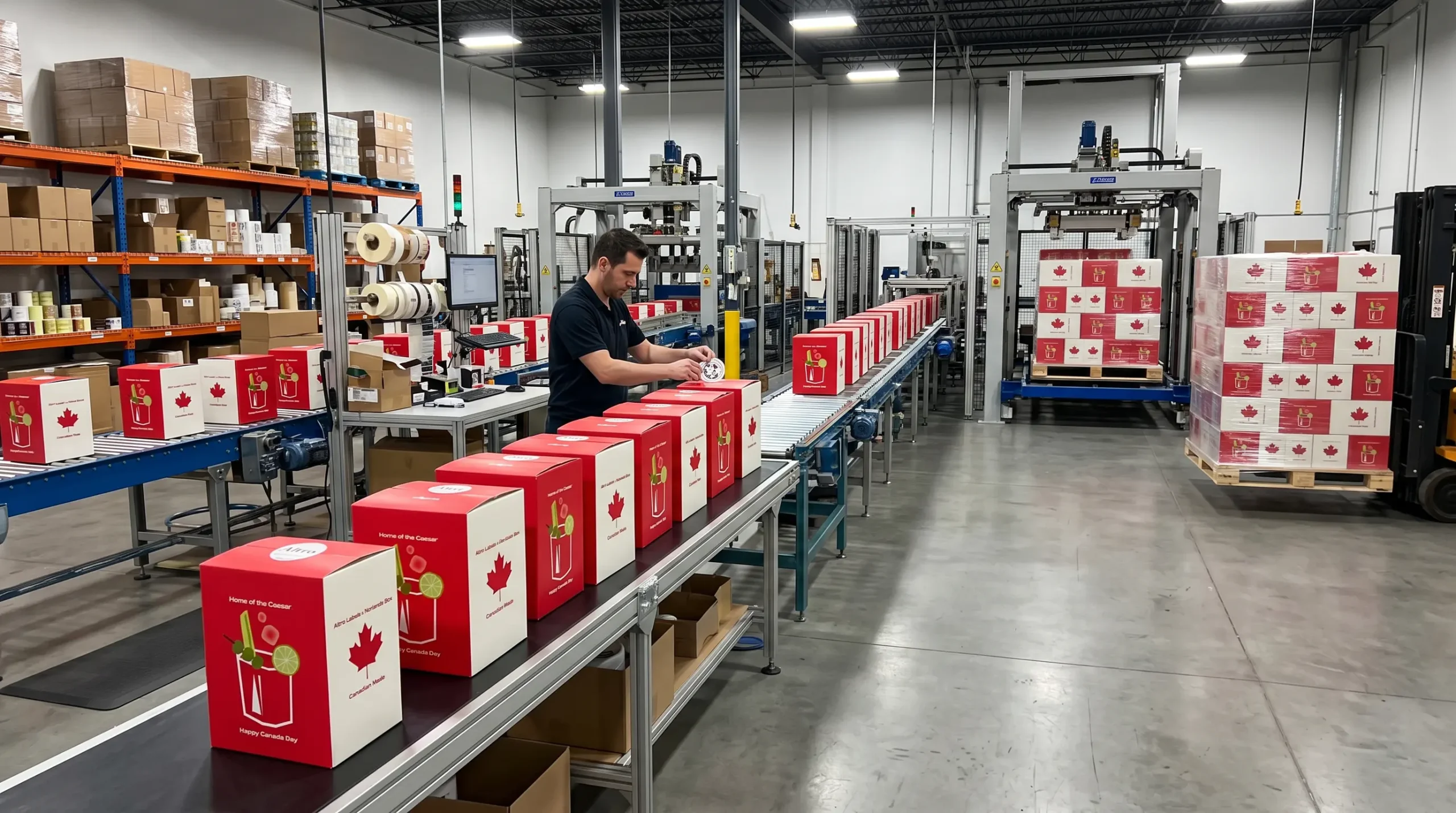
Industrial packaging planning is the coordinated process of aligning packaging materials, equipment, workflows, and labour with the demands of manufacturing operations. It covers everything from forecasting material needs and scheduling packaging runs to designing line layouts and matching capacity to output. Far more than choosing a box, it’s a strategic function that ensures finished goods move from the production line to shipping without friction. In modern manufacturing, where speed and consistency define competitiveness, packaging planning sits at the intersection of production efficiency and supply chain readiness — making it a discipline that deserves the same attention as the production process it supports.
Why packaging planning is a strategic manufacturing function
Manufacturing research shows that leading manufacturers increasingly integrate production planning, packaging operations, and supply chain coordination into a single operational strategy. Aligning these functions improves workflow visibility, reduces production bottlenecks, and enables more efficient, scalable manufacturing by ensuring every stage of the operation supports overall production performance.
Treating packaging as a clerical task rather than a strategic one is where many operations go wrong. Packaging decisions ripple across the entire factory: they affect line speed, labour allocation, storage needs, and shipping costs. When planned strategically, packaging becomes a tool for scaling output and controlling cost; when neglected, it becomes the constraint that limits everything else. Elevating packaging planning to a strategic level means involving it in capacity decisions, production scheduling, and growth planning — not just material purchasing.
The connection between packaging planning and production efficiency
Production efficiency and packaging efficiency are inseparable. A line can run at peak speed, but if packaging can’t keep pace, finished goods back up and the gains evaporate. Well-planned packaging operations match the rhythm of production, eliminating the stop-start cycles that waste time and capacity. For Lower Mainland manufacturers paying premium rates for floor space and skilled labour, this alignment directly protects the bottom line — every minute of idle production caused by a packaging lag is expensive. Strong industrial packaging planning keeps the whole operation flowing as one synchronized system.
Mistake 1: Treating Packaging as the Final Step Instead of Part of Production Planning
One of the most common and damaging mistakes in industrial packaging planning is treating packaging as the final step of production instead of integrating it into the production planning process from the beginning. Many manufacturers focus heavily on machinery, staffing, raw materials, and output targets, while packaging is left as an afterthought. This approach creates serious operational problems because packaging must absorb every upstream decision without being considered in those decisions.
When packaging is separated from production planning, line speeds, batch sizes, labor requirements, material availability, and shipping schedules may all be determined without asking whether the packaging operation can keep up. This creates a disconnect between what the production line can manufacture and what the packaging team can actually prepare for shipment.
Effective industrial packaging planning solves this problem by treating packaging as a core part of the manufacturing process. Packaging materials, equipment capacity, labor availability, changeover time, and shipping requirements should all be planned alongside production schedules. When industrial packaging planning is integrated early, manufacturing and packaging move together as one coordinated system rather than colliding at the end of the line.
Why Packaging Should Be Integrated Into Production Planning
Strong industrial packaging planning begins with the understanding that packaging is not separate from production. Packaging determines whether finished goods can be handled, stored, shipped, and delivered on time. If packaging capacity is not aligned with production output, even the most efficient manufacturing line can be slowed by downstream bottlenecks.
When packaging is treated as an afterthought, manufacturers often face problems such as:
- Finished goods piling up before packaging
- Packaging materials running out unexpectedly
- Workers being scheduled too late
- Equipment sitting idle while packaging catches up
- Shipments missing planned dispatch windows
These issues are not random. They are usually symptoms of weak industrial packaging planning.
Integrating packaging into production planning ensures that every production run is supported by the right packaging materials, labor, equipment, and workflow capacity. This means packaging teams know what is being produced, when it will arrive, how much volume to expect, and what materials are required.
In high-volume environments, industrial packaging planning helps prevent production from outpacing packaging capacity. Instead of packaging reacting to production, both functions operate from the same plan.
The Impact of Disconnected Packaging Workflows
Disconnected packaging workflows are one of the clearest signs of poor industrial packaging planning. When the packaging team only learns about a production run after finished goods arrive at their station, they have no time to prepare properly.
This creates friction across the operation. Packaging staff may need to locate materials at the last minute, adjust labor schedules, change equipment settings, or rush through tasks to keep up with production. These reactive workflows increase the risk of mistakes, delays, material waste, and quality issues.
Poor industrial packaging planning can lead to:
- Incorrect packaging materials being used
- Inconsistent labeling
- Increased product handling
- Longer packaging cycle times
- More rework and repacking
- Delayed shipping
Finished products may also pile up while waiting to be packed. This consumes valuable floor space and creates congestion around the production line. In some cases, production may need to slow down or stop entirely because downstream packaging cannot absorb the output.
For manufacturers operating in expensive industrial markets such as Vancouver and the Lower Mainland, this is especially costly. Floor space is limited, labor is expensive, and shipping windows are often tight. Weak industrial packaging planning can quickly turn packaging into a hidden cost center that limits growth.
Building Packaging Into Manufacturing Schedules
The most effective way to avoid this mistake is to build packaging directly into the manufacturing schedule. In strong industrial packaging planning, packaging capacity is treated as a scheduling input just like machine availability, raw material supply, maintenance windows, and labor planning.
This means manufacturers should plan for:
- Packaging material readiness
- Packaging labor requirements
- Equipment capacity
- Changeover time
- Labeling and compliance needs
- Palletizing requirements
- Shipping deadlines
When packaging is included in scheduling decisions, production runs can be sequenced more intelligently. For example, similar packaging formats can be grouped together to reduce changeover time. High-volume jobs can be scheduled when packaging labor and materials are fully available. Products with strict shipping deadlines can be prioritized based on both production and packaging readiness.
This type of industrial packaging planning reduces last-minute pressure and improves operational flow.
Instead of asking, “Can production make this?” businesses begin asking, “Can the full system produce, package, and ship this on time?”
That shift is essential for scalable manufacturing.
How to Overcome Packaging Growth Barriers and Scale Operations Successfully
Quick question:
You might also like
Aligning Packaging Materials With Production Runs
Material planning is another important part of industrial packaging planning. Packaging cannot support production if boxes, inserts, labels, tape, pallets, or protective materials are not available when needed.
Without proper planning, companies may experience material shortages even when production materials are fully stocked. This creates a frustrating situation where goods are ready but cannot be shipped because packaging supplies were not prepared.
Strong industrial packaging planning connects packaging inventory with production forecasts. Each production run should have a corresponding packaging requirement list that includes quantities, formats, lead times, and supplier availability.
This helps businesses avoid:
- Emergency packaging orders
- Premium freight costs
- Production delays
- Packaging substitutions
- Inconsistent customer presentation
By aligning packaging procurement with manufacturing schedules, companies can reduce risk and improve supply chain stability.
Coordinating Packaging With Shipping Deadlines
Packaging also needs to be coordinated with outbound logistics. In effective industrial packaging planning, the goal is not only to produce and package goods but to ensure they are ready for shipment before carrier cutoffs, freight pickups, or port deadlines.
This is especially important for Vancouver manufacturers that rely on the Port of Vancouver or cross-border transportation routes. A production run that finishes on time can still miss a shipment if packaging is delayed.
Good industrial packaging planning ensures packaging readiness aligns with:
- Freight pickup times
- Carrier schedules
- Port cutoffs
- Cross-border documentation timelines
- Customer delivery commitments
When packaging is synchronized with logistics, businesses reduce the risk of missed shipments, storage delays, and customer dissatisfaction.
Industrial Packaging Planning as a Competitive Advantage
Ultimately, treating packaging as the final step is one of the most damaging mistakes in industrial packaging planning because it creates avoidable bottlenecks at the exact point where products should be moving toward customers.
Businesses that integrate packaging into production planning gain:
- Better production flow
- Fewer packaging delays
- Lower material waste
- Improved labor scheduling
- Stronger shipping reliability
- Better use of floor space
- Higher customer satisfaction
Effective industrial packaging planning turns packaging from a reactive task into a coordinated operational function. It ensures that packaging is ready before products arrive, materials are available before they are needed, and shipping schedules are supported by both production and packaging capacity.
Manufacturers that plan packaging early are better positioned to scale efficiently, reduce bottlenecks, and maintain reliable delivery performance. In modern manufacturing, industrial packaging planning is not just a support function—it is a core requirement for operational success.
Mistake 2: Poor Capacity Planning Creates Manufacturing Bottlenecks
Capacity limitations in packaging operations
Packaging capacity is often set once and never revisited, even as production scales. A packaging line sized for last year’s volume becomes this year’s bottleneck the moment output climbs past its ceiling. These limitations show up as backed-up goods, overflowing buffer zones, and a production line forced to slow down so packaging can catch up. Because packaging sits at the tail end of manufacturing, its capacity effectively caps the entire operation’s throughput — no factory can ship faster than it can pack. Recognizing packaging capacity as a hard limit on total output, not a secondary concern, is the first step toward removing the bottleneck.
Matching packaging resources with production demand
Effective capacity planning means continuously aligning packaging resources — equipment, labour, and materials — with actual and projected production demand. This isn’t a one-time calculation; demand fluctuates with seasons, promotions, and growth, and packaging capacity must flex to match. When resources are matched correctly, production and packaging run in balance, with neither starving nor overwhelming the other. Planning against forecasted demand rather than current demand keeps the operation ready for surges before they arrive, avoiding the costly scramble of reacting after a bottleneck forms.
Identifying hidden packaging constraints
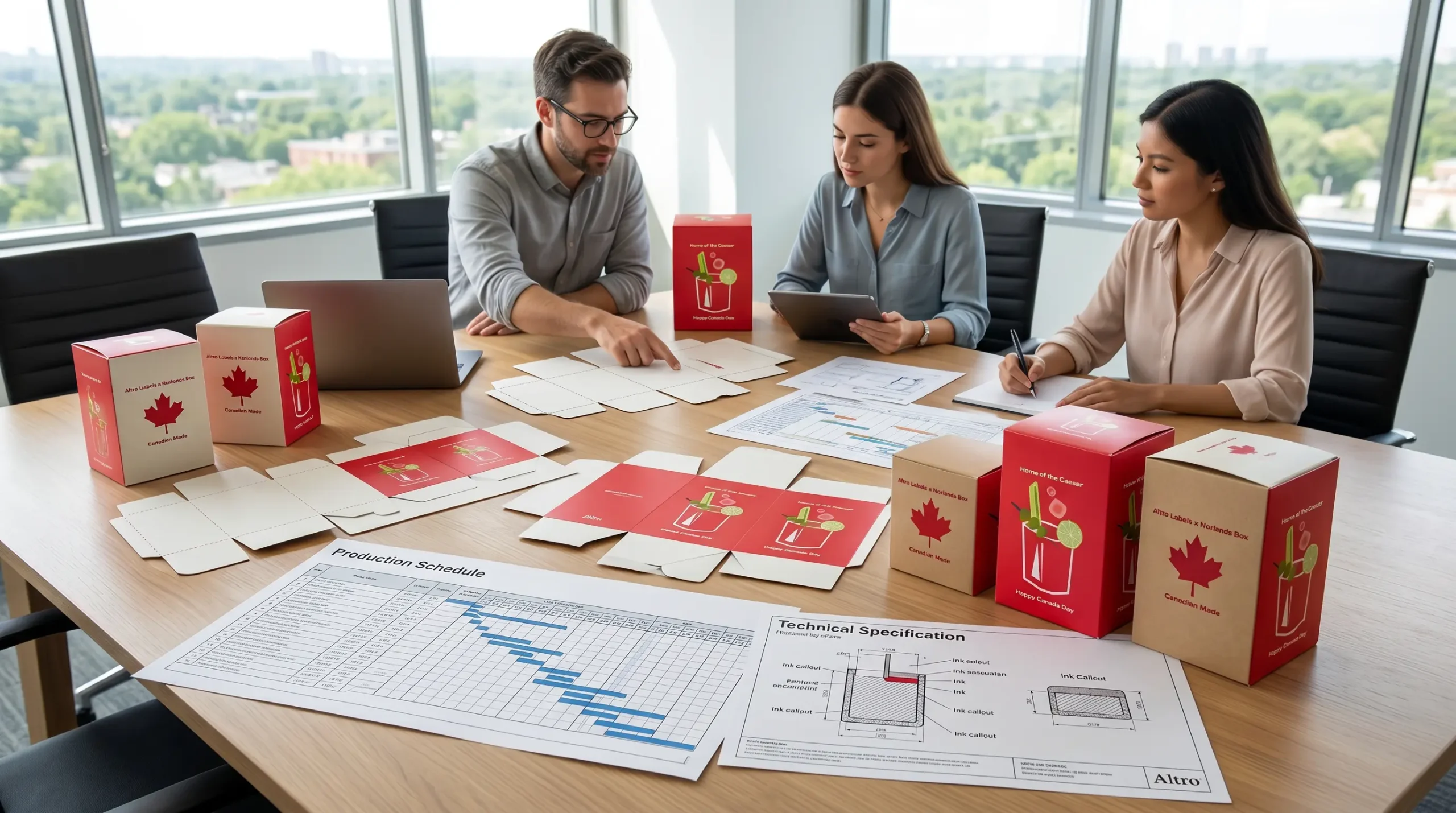
Some capacity constraints hide in plain sight. A single shared machine that every product line depends on, a manual quality check that creates a chokepoint, or a changeover process that eats hours between runs can throttle output without being obvious. These hidden constraints often don’t appear until volume rises and they suddenly dominate the line. Mapping the full packaging workflow and timing each step exposes where capacity quietly leaks. For Lower Mainland operations working within constrained, high-cost floor space, finding and fixing these hidden constraints often releases capacity without the expense of new equipment or square footage.
Mistake 3: Choosing Packaging Based Only on Cost
Why the lowest-cost packaging can increase total operational costs
Selecting packaging on purchase price alone is a trap that quietly inflates total costs. The cheapest box, film, or fill material often performs worse on the line — jamming machines, tearing during handling, or failing to protect products in transit. Each of those failures triggers expensive downstream consequences: line stoppages, rework, damaged goods, and returns. A material that saves a few cents per unit can cost far more once you account for the disruptions it causes. Smart industrial packaging planning evaluates the full cost of ownership, not just the invoice price.
Performance vs purchase price
Performance and price tell two different stories. A higher-priced material that runs cleanly through automated equipment, protects products reliably, and requires less labour often delivers a lower true cost than a cheaper alternative that constantly causes problems. The right lens is total value: how the material affects line speed, damage rates, labour needs, and customer satisfaction. Judging packaging by its performance on the line — rather than its sticker price — consistently produces better operational and financial outcomes.
Long-term manufacturing impacts
Cost-only decisions also carry long-term consequences that compound over time. Poor-quality packaging accelerates equipment wear, raises defect and waste rates, and erodes product reputation through damaged deliveries. For Vancouver manufacturers, where British Columbia’s extended producer responsibility rules and customer expectations push toward sustainable, compliant materials, the cheapest option may also create regulatory and brand risk. Weighing these long-term manufacturing impacts against short-term savings reveals that low-cost packaging is frequently the most expensive choice in the end.
Mistake 4: Lack of Coordination Between Production, Packaging, and Logistics
Communication gaps across departments
When production, packaging, and logistics operate as separate silos, small misalignments snowball into major disruptions. Production ramps up a run without warning packaging, packaging finishes goods that logistics isn’t ready to ship, and each team optimizes for its own targets while the overall flow suffers. These communication gaps are among the most preventable causes of manufacturing bottlenecks, yet they persist because no single function owns the handoffs between them. Closing the gaps starts with shared information — common schedules, forecasts, and visibility into what each team is doing and when.
Packaging planning within integrated operations
The strongest operations treat production, packaging, and logistics as one connected system rather than a relay of isolated steps. In an integrated model, packaging planning draws on production schedules and shipping requirements simultaneously, so materials, labour, and capacity are ready exactly when needed. This coordination eliminates the dead time and rework that plague disconnected workflows. Integration doesn’t require merging departments — it requires aligning their plans around a single, shared view of what the operation needs to deliver.
Aligning production schedules with shipping requirements
Production and shipping must work backward from the same deadlines. When manufacturing schedules ignore freight timelines, finished goods either wait around or miss their shipping window entirely. Aligning the two means sequencing production and packaging so orders are packed and ready ahead of carrier pickups and freight cutoffs. For Vancouver manufacturers, this alignment is especially critical given tight schedules at the Port of Vancouver and cross-border freight to Washington State — missing a cutoff can delay delivery by days. Synchronizing production output with shipping requirements keeps goods moving smoothly from line to customer.
Mistake 5: Ignoring Future Production Growth
Packaging systems that cannot scale
Packaging systems built only for today’s volume become tomorrow’s ceiling. When a business designs its packaging operation around current output without planning for growth, every gain in production eventually slams into a packaging wall. Equipment maxes out, layouts grow cramped, and workflows that ran smoothly at low volume buckle under higher demand. The failure isn’t the growth itself — it’s planning a system with no headroom. Designing packaging operations with deliberate capacity to spare ensures that rising production lifts the business rather than overwhelming it.

Capacity planning for expansion
Forward-looking capacity planning treats expansion as a certainty to prepare for, not a surprise to react to. This means projecting future volume, identifying where current packaging capacity will run out, and mapping the investments needed before the limit is reached. Planning in stages — knowing which bottleneck to address first and what the next phase requires — turns growth into a managed progression instead of a series of emergencies. For Lower Mainland manufacturers weighing expensive industrial space, this foresight also informs smart real estate and equipment decisions, avoiding costly retrofits later.
Flexible industrial packaging strategies
Flexibility is the hedge against an uncertain future. Modular equipment that scales in stages, adaptable line layouts, and supplier agreements that flex with volume all let a packaging operation grow without disruptive overhauls. Standardized, configurable packaging formats add further agility, letting the operation absorb new products and rising demand smoothly. Building this flexibility into industrial packaging planning from the outset means the operation can scale on demand — expanding capacity in step with growth rather than scrambling to catch up after the fact.
Mistake 6: Relying on Manual Packaging Processes
A major mistake in industrial packaging planning is relying too heavily on manual packaging processes after production volume has already started to grow. Manual packing may feel manageable in the early stages of a manufacturing operation, but it often becomes one of the first serious constraints once output increases. In high-volume environments, industrial packaging planning must account for speed, repeatability, labor availability, error control, and long-term scalability.
When businesses fail to include automation and workflow efficiency in industrial packaging planning, packaging quickly becomes the bottleneck that limits total production capacity. A manufacturing line may be capable of producing large quantities, but if finished goods still need to be hand-packed, manually labeled, visually counted, or palletized by workers, the entire operation eventually slows to the pace of the packaging team.
Manual Bottlenecks in High-Volume Manufacturing
Manual packaging processes are one of the most common weaknesses in industrial packaging planning. At low volume, hand-packing, manual labeling, and visual counting may seem practical because they require little upfront investment. However, as production increases, these same processes become difficult to sustain.
Manual packaging steps operate at human speed, and human speed cannot consistently match the pace of a high-throughput production line. As output climbs, manual tasks begin to fall behind, creating delays between production, packaging, warehousing, and shipping.
Poor industrial packaging planning often leads to:
- Slower order processing
- Increased labor pressure
- Higher error rates
- More rework
- Greater packaging waste
- Delayed shipments
Repetitive manual work also increases the risk of mistakes. Workers may apply incorrect labels, miscount units, use the wrong packaging format, or miss quality issues during rushed shifts. These errors create downstream problems that affect inventory accuracy, customer satisfaction, and operational costs.
In high-volume manufacturing, manual packaging is not just inefficient. It becomes a capacity ceiling. Even if production equipment can produce more, the business cannot scale effectively if packaging cannot keep up. This is why industrial packaging planning must evaluate packaging capacity alongside production capacity rather than treating packaging as an afterthought.
Automation Opportunities in Industrial Packaging Planning
Automation directly addresses many of the bottlenecks created by manual packaging processes. In effective industrial packaging planning, automation is not viewed as a luxury investment. It is a practical tool for increasing throughput, improving consistency, and reducing operational strain.
Common automation opportunities include:
- Automated case erectors
- Box sealing systems
- Label applicators
- Filling systems
- Void-fill equipment
- Conveyors
- Palletizers
- Barcode scanning systems
These systems handle repetitive packaging tasks faster and more consistently than manual teams. They also reduce variability, which is critical in industrial packaging planning because consistency supports quality control, inventory accuracy, and shipping reliability.
The best approach is often staged automation. Businesses do not need to automate every packaging process at once. Instead, industrial packaging planning should identify the single worst bottleneck first. This may be carton forming, labeling, sealing, palletizing, or material handling. Once that bottleneck is improved and the return is clear, automation can gradually expand into other parts of the packaging operation.
For Vancouver and Lower Mainland manufacturers, automation can be especially valuable because labor costs are high and hiring reliable packaging staff can be difficult. In this environment, strong industrial packaging planning often shows faster payback from automation than regions where lower labor costs allow manual processes to remain viable for longer.
Reducing Labor Dependency
Another reason automation matters in industrial packaging planning is labor dependency. Packaging operations that rely heavily on manual labor are more vulnerable to staffing shortages, turnover, absenteeism, and training challenges. If enough workers are not available for a shift, packaging capacity drops immediately.
This creates operational fragility. Production may be ready, materials may be available, and orders may be scheduled, but if the packaging team is understaffed, shipments still slow down.
Industrial packaging planning should reduce this dependency by designing systems that allow people and equipment to work together more efficiently. Automation does not remove the need for skilled workers. Instead, it shifts employees away from repetitive tasks and into higher-value roles such as:
- Quality control
- Line supervision
- Equipment monitoring
- Process improvement
- Inventory coordination
- Packaging performance checks
This improves both scalability and resilience. Workers are used where human judgment matters most, while machines handle repetitive tasks that require speed and consistency.
Why Manual Processes Increase Operational Risk
Manual packaging also increases operational risk because it introduces inconsistency into the system. Even experienced workers may perform tasks differently from shift to shift. One team may use more filler than another. One worker may label faster but less accurately. Another may pack more carefully but slower.
In weak industrial packaging planning, these variations are rarely measured until they create visible problems. Over time, inconsistent manual processes can lead to:
- Higher material usage
- Unstable pallet loads
- More product damage
- Incorrect shipments
- Slower throughput
- Poor packaging quality control
Standard operating procedures help, but they cannot fully remove the variability that comes with manual work. Automation, paired with clear process standards, gives manufacturers more control over packaging performance.
Building Scalable Packaging Systems
Strong industrial packaging planning focuses on scalability from the beginning. A packaging system should not only work for today’s production volume; it should support future growth without requiring constant emergency fixes.
Scalable packaging systems include:
- Standardized packaging formats
- Automation-compatible box designs
- Clear workflow layouts
- Efficient packing stations
- Reliable labeling systems
- Data tracking and performance monitoring
When these elements are planned properly, the packaging operation can grow alongside production instead of becoming the constraint that limits expansion.
Businesses that ignore manual bottlenecks often discover the problem too late. They add workers, extend shifts, and pay overtime, but the core issue remains the same: the packaging system was not designed to scale. Better industrial packaging planning prevents this by building capacity, automation readiness, and labor efficiency into the operation before growth overwhelms the system.
The Strategic Value of Automation-Ready Planning
Ultimately, relying on manual packaging processes is one of the most damaging mistakes in industrial packaging planning because it limits capacity, increases costs, and weakens operational resilience. Manual systems may appear inexpensive at first, but they often create hidden costs through overtime, errors, rework, waste, and delayed shipments.
A better approach is to treat packaging as a core part of manufacturing strategy. Businesses that integrate automation, workflow design, labor planning, and quality control into industrial packaging planning can increase throughput, reduce dependency on manual labor, and support long-term growth more confidently.
For manufacturers trying to scale, the question is not whether manual packaging works today. The real question is whether it will still work when volume doubles, customer expectations rise, and labor becomes harder to secure. Effective industrial packaging planning answers that question before the bottleneck appears.
Tell us what you’re packaging and we’ll help you find the right box style, material, and production path.
Need packaging that fits your product, timeline, and budget?

Mistake 7: Measuring Production Without Measuring Packaging Performance
One of the most overlooked mistakes in industrial packaging planning is measuring production performance while ignoring packaging performance. Many manufacturers invest heavily in monitoring production output, machine utilization, labor productivity, and manufacturing efficiency, yet they fail to apply the same level of measurement to packaging operations. This creates a significant blind spot that hides bottlenecks, reduces throughput, and limits overall operational performance.
Packaging is the final stage before products generate revenue. Even if manufacturing operates at maximum efficiency, products cannot be shipped until they are packaged correctly. Without packaging performance metrics, businesses often struggle to understand why shipments are delayed, costs continue rising, or customer orders are falling behind schedule.
Effective industrial packaging planning requires packaging to be measured with the same discipline as production. Data-driven packaging management helps organizations identify inefficiencies, improve workflows, reduce waste, and support continuous operational improvement.
Packaging KPIs Manufacturers Should Monitor
One of the most valuable improvements businesses can make in industrial packaging planning is establishing meaningful packaging Key Performance Indicators (KPIs). Without measurable data, packaging performance is often evaluated based on assumptions rather than objective evidence.
Monitoring packaging KPIs allows businesses to identify operational bottlenecks before they become major production constraints.
Important packaging KPIs include:
- Packaging throughput
- Packaging cycle time
- Equipment downtime
- Material utilization
- Packaging accuracy
- Order fulfillment rate
- Packaging defect rate
- Labor productivity
- Packaging cost per unit
- Packaging waste percentage
These KPIs provide a complete picture of packaging performance and reveal exactly where inefficiencies exist.
For example, packaging throughput measures how many products can be packaged within a given period. If production output continues increasing while packaging throughput remains unchanged, industrial packaging planning must address the packaging operation before production capacity can continue growing.
Cycle time is another critical metric. Measuring the time required to package each unit helps businesses identify unnecessary delays, inefficient workflows, or equipment limitations.
Material utilization is equally important because excessive packaging waste directly affects profitability and sustainability. Monitoring material usage allows organizations to optimize packaging designs while reducing unnecessary costs.
Packaging accuracy should also be measured carefully. Incorrect labeling, wrong packaging formats, missing components, or packing errors can create customer complaints, returns, and costly rework.
By incorporating these metrics into industrial packaging planning, businesses replace guesswork with measurable performance data that supports continuous operational improvement.
Production Efficiency vs. Packaging Efficiency
One of the biggest misconceptions in manufacturing is assuming strong production performance automatically means strong operational performance.
In reality, production efficiency and packaging efficiency are two different measurements that must be evaluated together.
Many organizations celebrate record production output while finished products accumulate in staging areas waiting to be packaged. In this situation, manufacturing appears successful, but the overall operation remains constrained.
Industrial packaging planning requires businesses to evaluate the entire production flow rather than individual departments in isolation.
Production efficiency answers the question:
“How efficiently are products being manufactured?”
Packaging efficiency answers a different question:
“How efficiently are finished products being prepared for shipment?”
The real measure of operational success is not how much is produced but how much reaches customers on time.
When production significantly outpaces packaging capacity, several operational problems emerge:
- Inventory accumulation
- Warehouse congestion
- Delayed shipments
- Increased handling costs
- Higher labor requirements
- Longer order lead times
These issues often remain hidden when companies focus exclusively on production metrics.
Industrial packaging planning helps bridge this gap by measuring packaging performance alongside manufacturing performance. Viewing both together provides a far more accurate picture of total operational throughput.
Instead of optimizing isolated processes, businesses can optimize the entire production system from manufacturing through packaging and shipping.
Using Data for Continuous Improvement
Collecting packaging data alone does not improve performance. The real value of measurement comes from using that information to drive continuous improvement.
Successful industrial packaging planning establishes an ongoing cycle of measurement, analysis, improvement, and verification.
Packaging data should be reviewed regularly to identify trends such as:
- Increasing equipment downtime
- Slower packaging cycle times
- Rising defect rates
- Higher material consumption
- Declining labor productivity
- Reduced packaging throughput
Rather than waiting until these problems significantly affect production, managers can intervene early with targeted improvements.
Continuous improvement initiatives may include:
- Packaging workflow redesign
- Equipment upgrades
- Employee training
- Material optimization
- Automation investments
- Packaging standardization
- Preventive maintenance
After implementing changes, businesses should continue monitoring the same KPIs to verify whether improvements produce measurable results.
This creates a structured feedback loop where every operational adjustment is supported by objective performance data.
Industrial packaging planning becomes significantly more effective when packaging decisions are based on measurable evidence rather than assumptions or intuition.
Building a Data-Driven Packaging Culture
Modern manufacturing environments increasingly depend on data to improve efficiency, reduce waste, and strengthen competitiveness.
Packaging should be managed with the same analytical discipline applied to production, quality assurance, and logistics.
Businesses implementing data-driven industrial packaging planning often use dashboards that provide real-time visibility into packaging performance.
These dashboards allow managers to monitor:
- Packaging line utilization
- Equipment efficiency
- Labor productivity
- Material consumption
- Packaging quality
- Order completion rates
Real-time visibility allows operational teams to respond immediately when performance begins declining instead of discovering problems after customer deliveries have already been affected.
This proactive approach reduces operational risk while improving responsiveness throughout the packaging operation.
Creating Long-Term Competitive Advantage
Ultimately, measuring packaging performance is not simply about generating reports—it is about building a more efficient and scalable business.
Companies that integrate packaging KPIs into industrial packaging planning gain a clearer understanding of how packaging influences production capacity, customer satisfaction, operational costs, and supply chain performance.
By continuously measuring, analyzing, and improving packaging operations, businesses can:
- Increase packaging throughput
- Reduce operational bottlenecks
- Improve labor efficiency
- Lower packaging costs
- Minimize material waste
- Improve shipment accuracy
- Strengthen customer satisfaction
- Support long-term business growth
The most successful manufacturers understand that production does not end when products leave the assembly line. It ends when products are packaged, shipped, and delivered successfully. Strong industrial packaging planning ensures that packaging receives the same level of measurement, attention, and continuous improvement as every other critical part of the manufacturing operation.
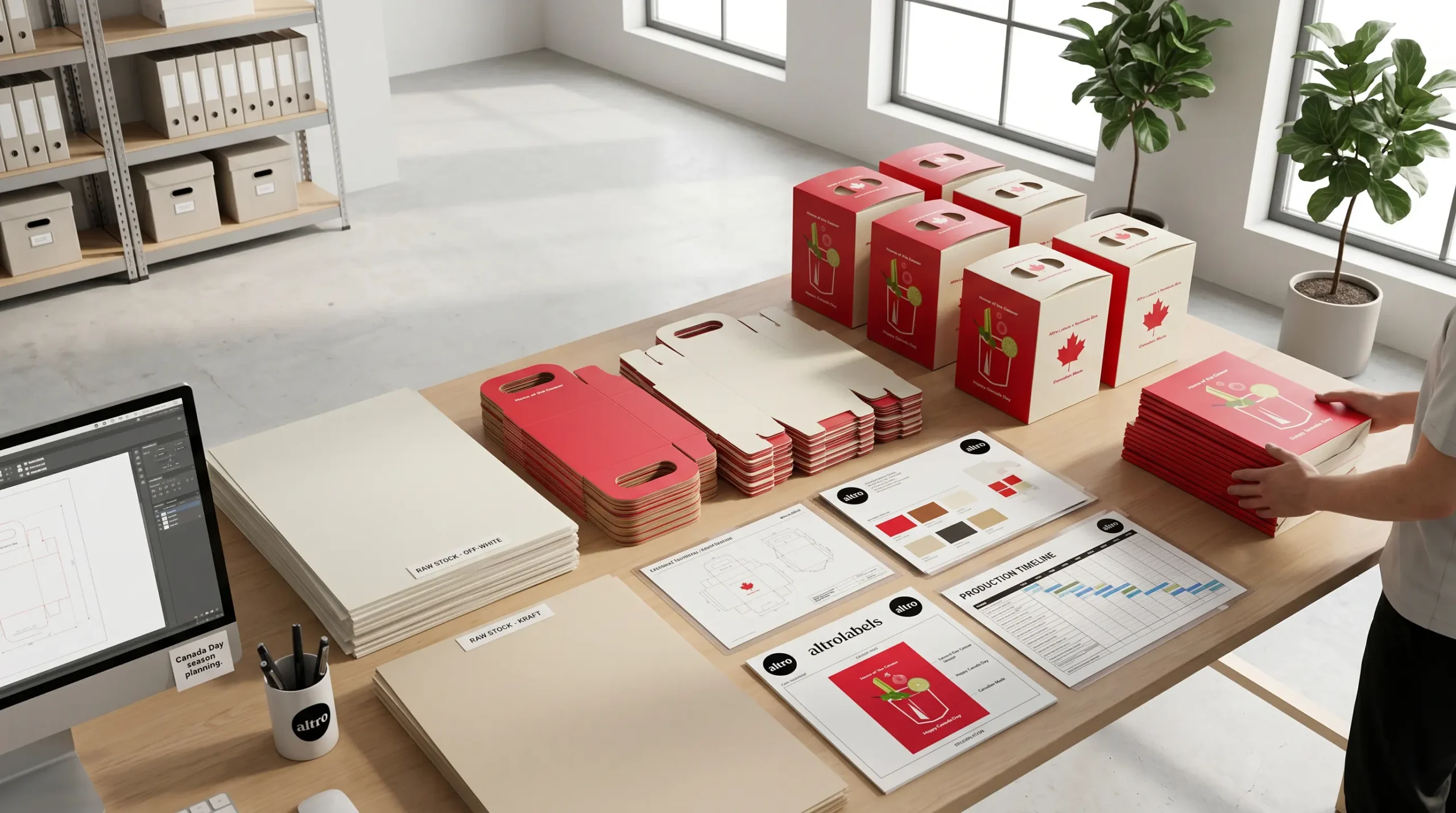
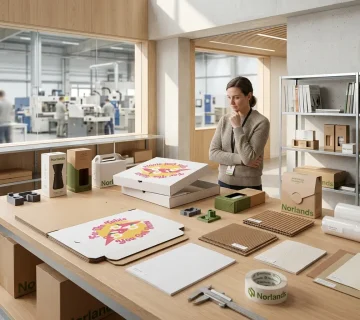
Organized material planning and production scheduling help manufacturers prevent bottlenecks while improving packaging consistency.
What is industrial packaging planning?
Industrial packaging planning is the process of coordinating packaging materials, equipment, workflows, and labour with manufacturing operations. It aligns packaging with production schedules to maximize efficiency, reduce bottlenecks, and ensure goods are ready for shipping without delay.
Why does poor packaging planning create manufacturing bottlenecks?
Because packaging sits at the end of production, weak planning lets goods back up there. Capacity limits, manual processes, and poor coordination cap throughput, forcing the whole line to slow to packaging’s pace.
How does industrial packaging planning improve production efficiency?
It syncs packaging capacity with production schedules, allocates resources against forecasted demand, and removes the stop-start cycles that waste time. The result is a balanced operation where production and packaging flow as one system.
What are the biggest industrial packaging planning mistakes?
The major errors include treating packaging as an afterthought, weak capacity planning, choosing materials on price alone, poor cross-department coordination, ignoring future growth, relying on manual processes, and failing to measure packaging performance.
Can automation improve industrial packaging planning?
Yes. Automation boosts packaging speed, consistency, and capacity while cutting errors and labour dependency. Targeting the worst bottleneck first delivers fast returns, especially in high-wage markets like Vancouver where manual processes cost more.
Which KPIs should manufacturers monitor for packaging?
Track packaging throughput, cycle time, downtime, material utilization, packaging accuracy, and order fulfillment rate. Measuring these alongside production metrics reveals the real throughput of the operation and exposes hidden bottlenecks.
Conclusion: Turning Industrial Packaging Planning Into a Competitive Edge
Strong industrial packaging planning is what separates a smooth, scalable factory from one perpetually fighting its own bottlenecks. The 7 mistakes covered here — treating packaging as a final step, weak capacity planning, cost-only sourcing, poor coordination, ignoring growth, leaning on manual processes, and failing to measure packaging performance — share a common root: treating packaging as an afterthought rather than a strategic part of production. Correcting them transforms packaging from a constraint into an engine of efficiency.
The path forward is practical. Integrate packaging into production schedules, plan capacity against future demand, judge materials on total value rather than price, and break down the silos between production, packaging, and logistics. Layer in automation where manual steps create chokepoints, and measure packaging performance with the same rigor you apply to production. Each fix compounds, steadily lifting throughput while lowering cost.
For Vancouver manufacturers, the payoff is sharpened by local realities. Premium Lower Mainland floor space rewards efficient layouts, a competitive labour market favours smart automation, and tight Port of Vancouver shipping windows demand packaging that’s ready exactly when freight is. Planning with these conditions in mind builds an operation tuned to its environment.
Address these mistakes early, and packaging stops being the hidden bottleneck that caps your production. Instead, it becomes a dependable foundation that supports lean manufacturing, scales with growth, and gives your operation a lasting competitive edge in an increasingly demanding market.




No comment