
introduction
Finding the right custom shipping boxes Canada is about more than selecting a cardboard carton that fits your products. For Canadian businesses, shipping packaging plays an important role in product protection, transportation efficiency, fulfillment operations, brand presentation, and overall distribution costs.
Whether you operate an e-commerce business, manufacture industrial products, distribute consumer goods, or manage a growing retail brand, your shipping boxes should be designed around the products they carry and the conditions they encounter throughout distribution.
Businesses searching for custom shipping boxes Canada solutions often need more than standard packaging. They need product-specific dimensions, appropriate corrugated strength, protective inserts, efficient packing structures, and professional printing options that support their commercial requirements.
At NORLANDS, the starting point for developing custom corrugated shipping packaging is understanding the product, its protection requirements, and its intended distribution journey.
What Are Custom Shipping Boxes?
Custom shipping boxes are packaging containers developed around a product’s dimensions, weight, protection requirements, transportation conditions, and branding needs.
Unlike generic shipping cartons, custom shipping boxes can incorporate product-specific corrugated structures, selected board grades, protective inserts, customized closures, and printed graphics.
The purpose of custom shipping boxes Canada businesses purchase is to create packaging that supports the actual requirements of their shipping operations.
Custom Shipping Boxes Explained
A custom shipping box begins with a defined packaging requirement. The structure may be developed around a single product, multiple items, a complete product collection, or a particular distribution method.
Custom shipping boxes can be designed to accommodate:
- Specific product dimensions and weights
- Fragile or sensitive products
- Multiple products within one shipment
- Protective corrugated inserts
- Warehouse stacking requirements
- Parcel and freight transportation
- Company logos and branded graphics
- Commercial packing and fulfillment operations

How Custom Shipping Boxes Differ From Standard Cartons
Standard shipping cartons are manufactured in predetermined dimensions and specifications. While they can be suitable for many applications, their available sizes may not provide an ideal fit for every product.
With custom shipping boxes in Canada, businesses can evaluate dimensions, structural styles, materials, and internal protection together rather than adapting their products to an existing carton.
Product-Specific Shipping Packaging
Product-specific shipping packaging considers the characteristics of the actual product being transported.
A fragile glass product, an automotive component, and a lightweight clothing order have different protection and transportation requirements. Each may benefit from a different combination of corrugated materials, dimensions, inserts, and structural features.
Why Custom Dimensions Alone Are Not Enough
Changing the length, width, and height of a shipping carton does not automatically create an effective packaging solution.
Successful custom shipping boxes Canada projects also consider board strength, product movement, stacking, assembly, transportation conditions, and internal protection.
The objective is not simply to manufacture a different-sized box. It is to develop a shipping structure that performs appropriately throughout distribution.
Why Canadian Businesses Choose Custom Shipping Boxes
Canadian businesses use custom shipping boxes to address practical challenges associated with product protection, packaging efficiency, commercial distribution, and customer experience.
Product Protection
Select packaging structures and materials around product-specific risks.
Better Product Fit
Reduce unnecessary internal space while maintaining protective clearance.
Shipping Efficiency
Evaluate package volume, handling, and transportation requirements.
Brand Presentation
Create consistent branded packaging across customer shipments.
Material Efficiency
Avoid unnecessary packaging material and excessive filler where possible.
Fulfillment Efficiency
Develop packaging that supports repeatable assembly and packing processes.
Improved Product Protection
One of the primary reasons businesses invest in custom shipping boxes in Canada is to improve product protection.
Appropriate corrugated board selection, product-specific structures, and internal protective components can help address impacts, compression, and movement during transportation.
Reduced Product Movement
Excessive movement inside a shipping box can increase the likelihood of products contacting each other or the outer packaging.
Custom shipping boxes can incorporate partitions, inserts, and structural supports designed to maintain product positioning throughout handling and transportation.
Better Packaging Fit
Made-to-size shipping boxes allow businesses to evaluate packaging dimensions around the product rather than relying entirely on available stock carton sizes.
A better fit may reduce unnecessary empty space while providing sufficient room for protective materials.
More Efficient Shipping
External box dimensions influence the amount of space shipments occupy in warehouses, vehicles, and distribution networks.
Properly designed custom shipping boxes Canada solutions may help improve shipping volume efficiency and reduce avoidable dimensional inefficiencies.
Consistent Brand Presentation
Custom printed shipping boxes allow businesses to incorporate recognizable logos, brand colours, graphics, and relevant product information into their packaging.
This creates a more consistent physical brand experience across customer deliveries.
Reduced Unnecessary Packaging Material
By matching packaging dimensions and structures to actual requirements, businesses may reduce unnecessary corrugated material, excessive void fill, and additional packaging components.
Better Compatibility With Fulfillment Operations
Commercial shipping packaging should support the people and processes responsible for packing orders.
Custom shipping boxes can be developed with assembly, product loading, closure, storage, and repeatable packing operations in mind.
Types of Custom Shipping Boxes Available in Canada
Different shipping applications require different packaging structures. Businesses evaluating custom shipping boxes Canada should select a box style based on product characteristics, transportation conditions, and operational requirements.
Custom Regular Slotted Containers (RSC)
Regular slotted containers are widely used for commercial shipping, warehouse storage, retail distribution, and general transportation.
Custom RSC shipping boxes can be developed with product-specific dimensions and suitable corrugated board specifications.
Custom Corrugated Mailer Boxes
Corrugated mailer boxes commonly feature die-cut, self-locking structures that can support both shipping and product presentation.
They are particularly relevant to e-commerce brands, subscription businesses, direct-to-consumer products, and selected retail packaging applications.
Die-Cut Shipping Boxes
Die-cut shipping boxes allow more specialized structural features than conventional slotted cartons.
These features may include locking tabs, integrated supports, customized openings, product-specific shapes, and internal protective elements.
Heavy-Duty Shipping Cartons
Heavy-duty custom shipping boxes Canada applications may require stronger corrugated board grades, reinforced structures, or additional internal protection.
They are relevant to selected industrial products, heavy components, commercial equipment, and demanding distribution environments.
Telescoping Shipping Boxes
Telescoping boxes typically incorporate separate sections that overlap to form the finished container.
This structure can be useful for selected long, flat, oversized, or unusually shaped products.
Multi-Product Shipping Boxes
Multi-product shipping boxes are developed to accommodate several items within one packaging structure.
Custom partitions and dividers can help organize products, maintain separation, and reduce unnecessary movement.
Custom Industrial Shipping Boxes
Industrial custom shipping boxes in Canada should be evaluated around product weight, geometry, handling equipment, transportation methods, and stacking requirements.
Typical Applications
- Automotive components
- Machinery parts
- Manufactured components
- Industrial equipment
- Oversized products
- Commercial freight shipments
Structural Advantages
Industrial shipping packaging may incorporate reinforced corrugated structures, selected board grades, protective inserts, and product supports.
Customization Options
Dimensions, board construction, loading orientation, internal protection, closure requirements, and handling information can be evaluated according to the application.
Standard vs Custom Shipping Boxes
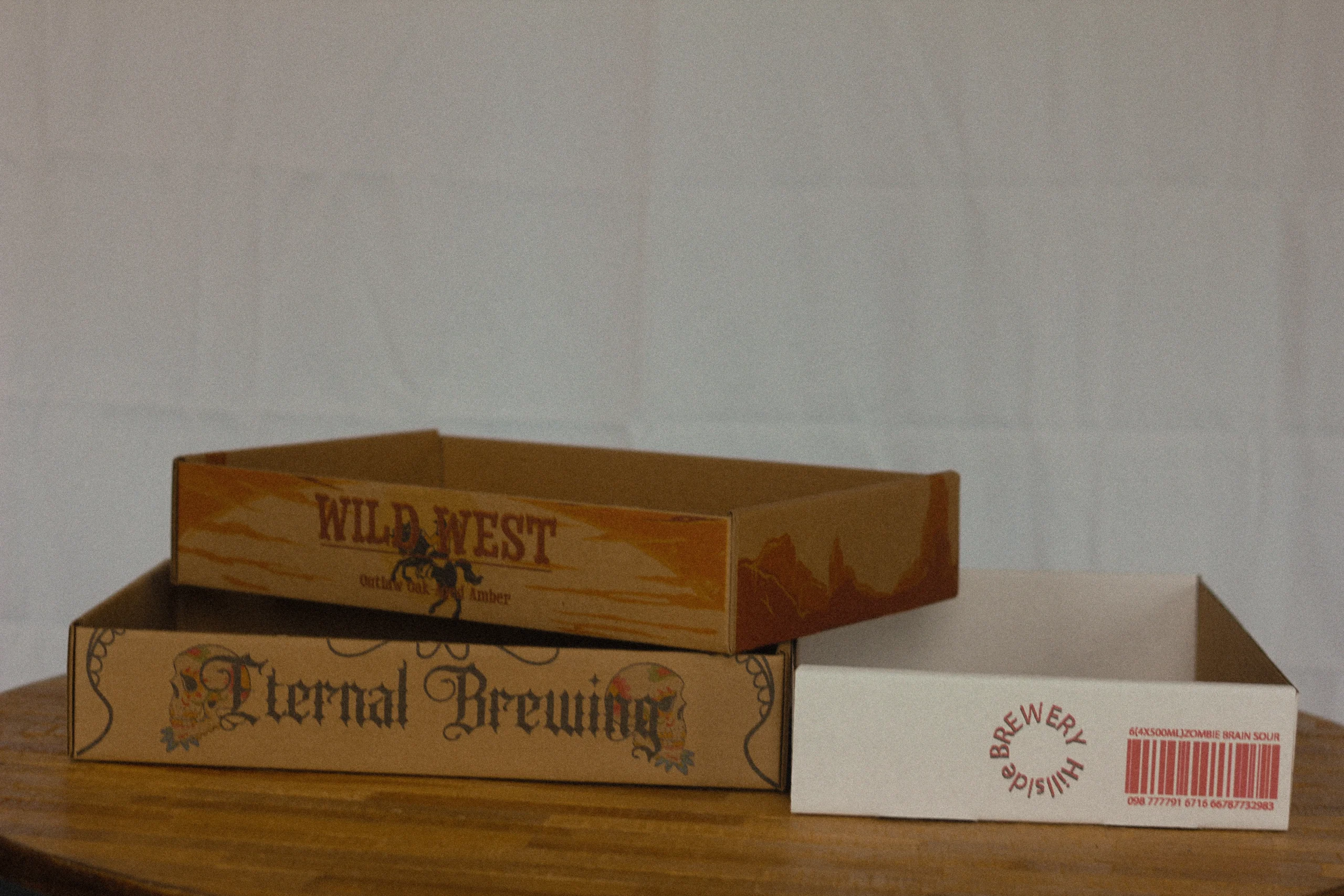
Understanding the differences between standard cartons and custom shipping boxes Canada manufacturers produce can help businesses determine which purchasing approach is appropriate for their operations.
| Feature | Standard Shipping Boxes | Custom Shipping Boxes |
|---|---|---|
| Dimensions | Predetermined sizes | Product-specific dimensions |
| Product Fit | May require additional filler | Can be optimized around the product |
| Board Selection | Limited to available specifications | Selected according to requirements |
| Protective Inserts | Usually separate components | Can be integrated into the design |
| Branding | Often limited | Custom printing options |
| Shipping Efficiency | Depends on available sizes | Can be optimized for distribution |
| Initial Development | Generally minimal | May require design and prototyping |
| Purchasing | Often suitable for smaller quantities | Particularly relevant to repeat commercial orders |
Product Fit
Standard cartons can provide an effective solution when an available size already matches the product and its protection requirements.
Custom shipping boxes offer additional flexibility when available carton dimensions create excessive space or insufficient protective clearance.
Structural Protection
Custom shipping packaging allows businesses to evaluate the structural design alongside product weight, handling conditions, and transportation requirements.
Material Usage
Right-sized custom shipping boxes Canada solutions may help reduce unnecessary material consumption when compared with unsuitable oversized cartons.
Internal Packaging Requirements
Custom corrugated inserts, dividers, and product supports can be developed alongside the outer shipping box.
Shipping Efficiency
Custom dimensions can be evaluated according to external package volume, carrier requirements, pallet configurations, and warehouse operations.
Branding Opportunities
Custom printed shipping boxes allow businesses to coordinate structural packaging requirements with brand graphics and product information.
Production and Inventory Considerations
Custom packaging may require initial structural development, prototyping, tooling, and production planning.
Businesses should evaluate these requirements against expected order volumes, repeat purchasing, and potential operational benefits.
Custom Shipping Boxes Start With the Product
The most important principle when developing custom shipping boxes in Canada is that the product should determine the packaging requirements.
Starting with an available carton and attempting to adapt the product to it may introduce unnecessary space, protection challenges, or packing inefficiencies.
Product Dimensions
Accurate product measurements provide the foundation for determining internal box dimensions.
Measurements should also account for necessary protective components, material thickness, manufacturing tolerances, and loading requirements.
Product Weight
The total packed weight influences corrugated board selection, structural design, handling requirements, and stacking performance.
Heavier products may require different packaging specifications than lightweight consumer goods.
Product Geometry
Products with irregular shapes, protruding components, curved surfaces, or unusual dimensions may require specialized packaging structures or internal supports.
Fragility and Surface Sensitivity
Fragile products and sensitive finishes may require protection against impacts, abrasion, direct contact, and movement.
Product-specific custom shipping boxes Canada solutions can incorporate protective elements designed around these risks.
Number of Products per Shipment
Shipping multiple products within one carton introduces additional considerations, including item separation, weight distribution, internal organization, and packing consistency.
Product Orientation
Some products require a specific orientation during packing, handling, or transportation.
The shipping box and its internal components should support the required product position where appropriate.
Handling and Transportation Requirements
Packaging requirements can differ between local deliveries, parcel shipments, palletized freight, warehouse transfers, and long-distance commercial distribution.
Understanding the actual shipping journey helps determine which packaging characteristics are necessary.

Design the Box Around the Product
The shipping box should be designed around the product and its distribution journey—not simply around an available carton size.
Choosing the Right Corrugated Board for Custom Shipping Boxes
Corrugated board selection is one of the most important technical decisions when developing custom shipping boxes Canada businesses intend to use for commercial transportation.
The appropriate material depends on product weight, box dimensions, stacking requirements, transportation conditions, and the overall structural design.
Single-Wall Corrugated Shipping Boxes
Single-wall corrugated board consists of one fluted paper medium positioned between two linerboards.
It is widely used for general shipping, e-commerce fulfillment, retail distribution, and selected commercial packaging applications.
Its suitability depends on the selected board grade and the actual requirements of the shipment.
Double-Wall Corrugated Shipping Boxes
Double-wall corrugated board incorporates two fluted mediums and three linerboards.
This construction may provide additional structural performance for heavier products, demanding transportation environments, and applications with increased stacking requirements.
Triple-Wall Corrugated Applications
Triple-wall corrugated board incorporates three fluted mediums and may be considered for selected heavy-duty industrial packaging applications.
However, increasing the number of walls is not automatically the most efficient solution. Board grade, dimensions, product supports, and handling conditions remain important.
Corrugated Flute Selection
Corrugated flute profiles influence board thickness, cushioning characteristics, structural performance, and printing suitability.
When developing custom corrugated shipping boxes, flute selection should be considered alongside the complete packaging structure.
Edge Crush Test (ECT)
The Edge Crush Test measures the edgewise compression resistance of corrugated board.
ECT is one of several factors that can help evaluate the stacking-related performance of corrugated packaging.
It should not be treated as the only measurement of finished box performance.
Box Compression Strength
Box compression strength relates to the ability of a finished carton to withstand compressive loads.
For businesses purchasing custom shipping boxes in Canada, compression performance can be particularly important when products are stacked during storage, palletized transportation, and commercial distribution.
Selecting Board Grades Based on Shipping Conditions
Product Weight
Board selection should account for the total packed product weight and how that weight is distributed within the carton.
Stacking Requirements
Packaging should be evaluated according to expected stacking configurations, storage duration, and compressive loads.
Transportation Distance
Longer distribution journeys may involve additional handling stages and transportation conditions that influence packaging requirements.
Environmental Conditions
Moisture exposure, temperature changes, and warehouse conditions should be considered when selecting corrugated materials for shipping.
More Corrugated Material Does Not Always Mean Better Packaging
Effective custom shipping boxes combine appropriate board strength, structural design, product fit, and internal protection. The objective is to meet the required performance without introducing unnecessary material or complexity.
How Custom Shipping Boxes Reduce Product Damage
Product damage is an important consideration for businesses investing in custom shipping boxes Canada solutions.
Damaged products can create replacement shipments, additional customer service requirements, returns, inventory losses, and unnecessary packaging waste.
Custom shipping packaging can address several common sources of damage by considering product-specific risks before production.
Preventing Internal Product Movement
Products that move excessively inside shipping cartons may experience repeated impacts during transportation.
Custom dimensions, protective inserts, partitions, and product supports can help maintain appropriate positioning inside the packaging.
Protecting Product Corners and Edges
Product corners and edges may be particularly vulnerable during handling and transportation.
Custom corrugated structures can incorporate protective clearance, corner supports, and internal components designed around these areas.
Reducing Direct Contact Between Products
When multiple products are shipped together, direct contact may result in scratches, abrasion, breakage, or surface damage.
Custom partitions and dividers can provide separation between individual items.
Managing Impacts During Handling
Shipping cartons may encounter impacts during loading, unloading, sorting, warehouse handling, and delivery.
Appropriate corrugated materials and internal protective structures can help manage these conditions according to the product’s sensitivity.
Improving Stacking Performance
Commercial distribution frequently involves stacking cartons in warehouses, vehicles, and palletized shipments.
Custom shipping boxes should be evaluated according to expected compressive loads, stacking patterns, and product weight distribution.
Protecting Products During Long-Distance Transportation
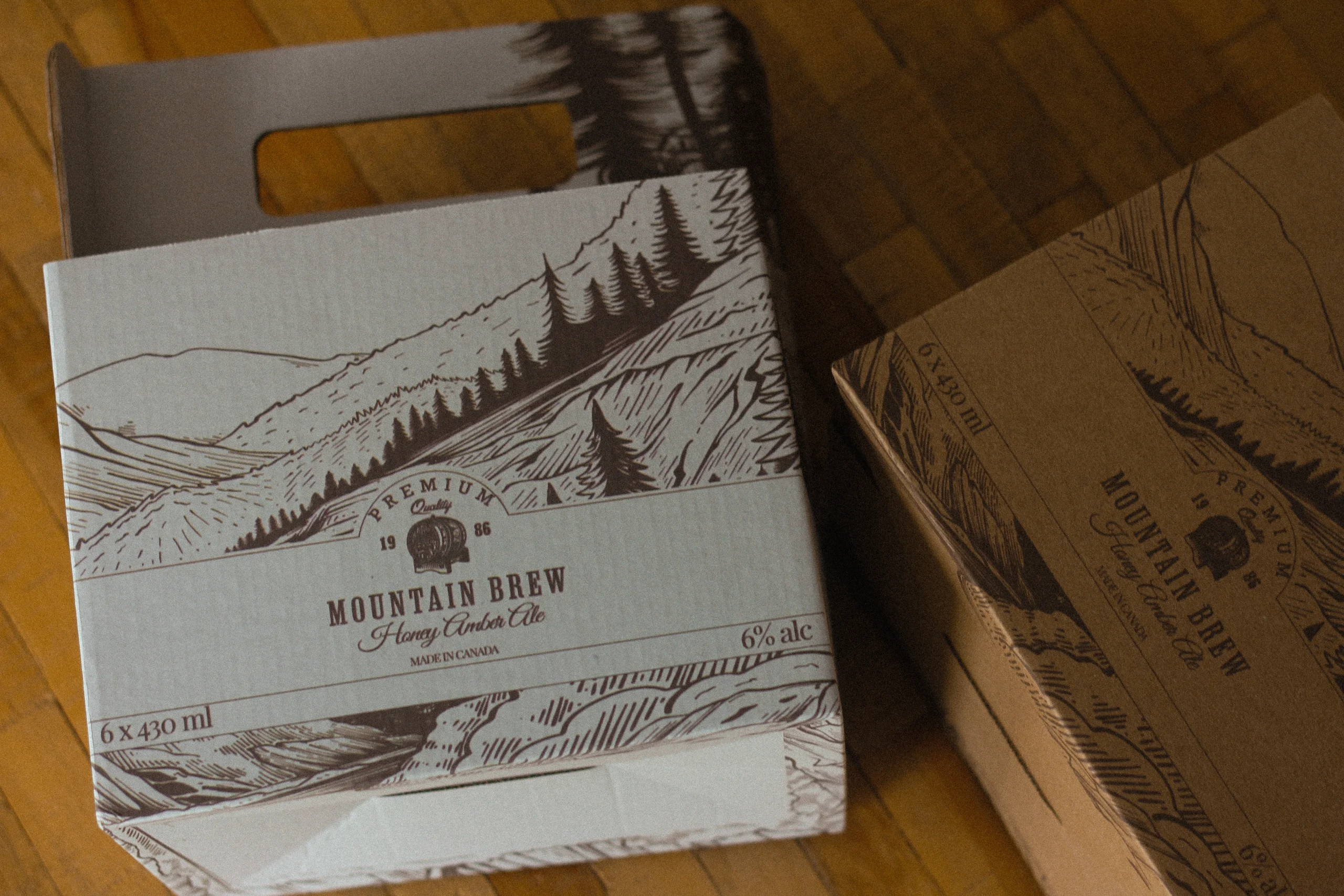
Long-distance shipping may expose packaging to repeated handling, vibration, changing environmental conditions, and multiple distribution stages.
Developing custom shipping boxes in Canada around these conditions can help businesses address transportation risks before commercial production.
Control Movement
Maintain appropriate product positioning inside the carton.
Manage Impacts
Select suitable structural and protective components.
Support Stacking
Evaluate compression and expected distribution loads.
Separate Products
Reduce unnecessary contact between packed items.
Custom Shipping Boxes With Protective Inserts
Protective inserts can be an important component of custom shipping boxes Canada projects, particularly when products require controlled positioning, separation, or additional structural support.
Rather than relying entirely on loose filler, businesses can evaluate internal packaging components developed around their specific products.
Corrugated Inserts
Corrugated inserts can be designed to support products, maintain positioning, create protective clearance, and organize internal packaging space.
Custom Partitions
Custom partitions divide the internal carton into individual compartments.
They can be particularly useful for multi-product shipments, beverage containers, fragile items, and commercial product distribution.
Product Dividers
Product dividers create separation between items and can help reduce unnecessary contact during handling and transportation.
Corner Protection
Custom corner protection can support vulnerable product areas and help maintain clearance between the product and outer shipping carton.
Product Cradles
Product cradles are internal structures developed around selected product shapes and support requirements.
They may be useful for products that require a specific position or orientation inside the shipping box.
Multi-Component Packaging
Products containing accessories, separate components, or multiple items may benefit from coordinated internal packaging structures.
Custom shipping boxes can be developed to accommodate these components within an organized packaging configuration.
Integrated Structural Protection
One advantage of custom shipping boxes in Canada is the ability to evaluate the outer carton and internal protection as parts of the same packaging system.
Preventing Product Movement
Integrated supports can help maintain the intended product position throughout distribution.
Reducing Unnecessary Void Fill
Product-specific inserts may reduce the need for loose filler when the internal structure provides appropriate protection.
Simplifying Packing Operations
Clearly defined product positions and internal components can support repeatable packing processes.
Right-Sized Custom Shipping Boxes Canada
Right-sized packaging is a practical consideration for businesses looking to improve shipping efficiency through customization.
When developing custom shipping boxes Canada solutions, the objective is to accommodate the product and its necessary protective components without creating excessive unused space.
What Is Right-Sized Packaging?
Right-sized shipping boxes are designed to accommodate a product and its necessary protective components without excessive unused space.
This approach can improve material efficiency, packing consistency, and transportation efficiency when appropriately implemented.
Reducing Empty Space
Oversized shipping cartons may create unnecessary internal volume that must be managed through additional protective materials.
Custom box dimensions can help address this issue while maintaining appropriate protective clearance.
Matching Box Dimensions to the Product
Custom shipping box dimensions should account for product measurements, internal components, corrugated thickness, manufacturing tolerances, and packing requirements.
Reducing Excessive Packaging Material
Right-sized custom shipping boxes in Canada may help businesses avoid corrugated material that does not contribute necessary protection or structural performance.
Reducing Additional Filler
Better product fit and integrated protective components may reduce the amount of additional void fill required for selected shipping applications.
Improving Shipping Volume Efficiency
External package dimensions determine how much physical space a shipment occupies.
Optimized dimensions may improve warehouse utilization, pallet configurations, and transportation efficiency depending on the distribution process.
How Custom Shipping Boxes Affect Dimensional Weight
Dimensional weight is an important consideration for businesses purchasing custom shipping boxes Canada solutions for parcel transportation.
A package’s shipping cost may be influenced by both its physical weight and the amount of space it occupies.
What Is Dimensional Weight?
Dimensional weight is a shipping calculation that converts package volume into a weight value using a carrier-specific divisor.
Carrier rules, measurement requirements, divisors, and billing calculations vary according to the shipping service.
Why Box Dimensions Matter
A lightweight product shipped inside an unnecessarily large carton may occupy significantly more transportation space than its physical weight suggests.
Custom shipping boxes allow businesses to evaluate whether external package dimensions can be optimized without compromising product protection.
Actual Weight vs Dimensional Weight
Actual weight refers to the physical weight of the packed shipment. Dimensional weight is calculated from the package’s external dimensions.
Depending on the carrier and service, the higher of these values may be used to determine the billable weight.
Canada Post uses volumetric equivalent to account for both the weight of a parcel and the transportation space it occupies. For Canadian businesses, evaluating external box dimensions before production can therefore help identify potential shipping inefficiencies without compromising product protection.
How Oversized Boxes Can Increase Shipping Costs
Oversized cartons can increase package volume and may generate higher dimensional-weight calculations under certain shipping services.
Businesses using custom shipping boxes in Canada can evaluate these potential inefficiencies when developing packaging specifications.
Optimizing External Package Dimensions
Shipping box optimization should consider external dimensions rather than only internal product measurements.
Corrugated thickness, protective clearance, internal supports, and structural features all influence the finished package dimensions.
Evaluating Shipping Costs Before Production
Before committing to commercial manufacturing, businesses can compare proposed packaging dimensions against relevant carrier rules and distribution requirements.
This allows potential shipping efficiencies to be evaluated alongside product protection, packaging material, and manufacturing considerations.
Custom Shipping Boxes Canada for E-Commerce
For online retailers and direct-to-consumer brands, custom shipping boxes Canada solutions are an important part of building an efficient and reliable fulfillment operation. Every package must protect the product, support efficient packing, and deliver a consistent customer experience.
Unlike traditional retail packaging, e-commerce shipping boxes may travel through multiple sorting facilities, transportation networks, and handling stages before reaching the customer.
Developing custom e-commerce shipping boxes around these conditions can help Canadian businesses improve packaging performance while addressing unnecessary shipping volume and material consumption.
Direct-to-Consumer Shipping
Direct-to-consumer businesses depend on shipping packaging to deliver products directly to customers without the additional protection of traditional retail distribution systems.
Custom shipping boxes in Canada can be developed around individual product dimensions, multi-product orders, protective requirements, and brand presentation.
Custom Corrugated Mailers
Custom corrugated mailer boxes are particularly relevant to e-commerce brands that require a combination of product protection, convenient assembly, and professional presentation.
Depending on their structural design, mailer boxes can incorporate self-locking panels, custom inserts, printed surfaces, and product-specific dimensions.
Product Protection During Parcel Delivery
Parcel shipments may encounter repeated handling, impacts, vibration, and compression throughout transportation.
Businesses purchasing custom shipping boxes Canada solutions should evaluate these conditions when selecting corrugated board grades, internal protection, and box structures.
Branded Unboxing Experiences
For many online businesses, the shipping box represents the first physical interaction between the customer and the brand.
Custom printed shipping boxes can incorporate logos, brand colours, interior graphics, and organized product presentation to create a consistent delivery experience.
Efficient Packing and Fulfillment
Custom shipping boxes should support the operational requirements of fulfillment teams.
Packaging that is easy to assemble, load, and close can help reduce unnecessary packing steps and improve consistency across customer orders.
Easy-Opening Structures
Selected custom shipping box structures can incorporate opening features that make product access more convenient for customers.
These features should be developed without compromising the packaging’s required transportation performance.
Returns-Friendly Packaging
Businesses that regularly process product returns may benefit from evaluating shipping structures that can be reopened and potentially reused.
The suitability of returns-friendly packaging depends on the condition of the box, closure design, product characteristics, and return shipping requirements.
Custom Shipping Boxes for Subscription Businesses
Subscription businesses have unique packaging requirements because products are shipped repeatedly, often with changing product combinations and consistent branding expectations.
For subscription companies researching custom shipping boxes Canada, packaging should support both operational efficiency and a recognizable customer experience.
Monthly Subscription Packaging
Monthly subscription shipments may require consistent outer box dimensions while accommodating products that change between delivery cycles.
Custom shipping packaging can be developed with these recurring requirements in mind.
Multi-Product Box Structures
Subscription boxes frequently contain several products within a single shipment.
Custom corrugated structures, partitions, and internal supports can help organize the contents and reduce unnecessary movement during transportation.
Consistent Product Organization
Organized internal packaging can improve product presentation while helping fulfillment teams maintain a consistent packing arrangement.
Repeatable Packing Processes
Subscription businesses can evaluate custom shipping box structures according to assembly requirements, product loading sequences, and repeatable packing procedures.
Seasonal Product Variations
When product combinations change throughout the year, businesses may benefit from flexible packaging structures or interchangeable inserts that accommodate selected variations.
Branded Customer Experiences
Custom printed shipping boxes allow subscription businesses to maintain consistent branding across recurring deliveries while adapting internal product configurations when necessary.
Custom Shipping Boxes for Retail and Wholesale Distribution
Retailers, wholesalers, manufacturers, and distributors require packaging that performs reliably throughout commercial supply chains.
Custom shipping boxes Canada solutions for retail and wholesale distribution should be developed around product quantities, warehouse handling, stacking requirements, transportation methods, and retail operations.
Shipping Products to Retail Stores
Products moving from manufacturers or distribution centres to retail stores may require shipping cartons designed for commercial handling and transportation.
Appropriate packaging specifications can help protect retail products before they reach their final selling environment.
Multi-Unit Shipping Cartons
Wholesale shipping cartons frequently contain multiple units of the same product.
Custom dimensions and internal arrangements can help businesses organize products efficiently while considering packed weight and handling requirements.
Secondary Product Packaging
Secondary shipping packaging groups individual packaged products into larger cartons for storage, transportation, and commercial distribution.
Custom shipping boxes in Canada can be evaluated around the dimensions and quantities of these individual retail packages.
Retail-Ready Packaging
Retail-ready corrugated packaging can be designed to support both distribution and selected in-store presentation requirements.
Structural features may help retail teams access, organize, or replenish products more efficiently.
Warehouse Handling
Warehouse operations may involve repeated carton movement, stacking, palletization, and inventory storage.
Custom shipping boxes should account for these operational conditions when selecting dimensions, materials, and structural specifications.
Consistent Commercial Distribution
Maintaining consistent packaging specifications across repeat commercial orders can support predictable handling, packing, storage, and distribution processes.
Heavy-Duty Custom Shipping Boxes Canada
Heavy-duty custom shipping boxes Canada solutions are relevant to businesses transporting products that place greater structural demands on their packaging.
Industrial components, machinery parts, automotive products, and oversized equipment may require corrugated structures developed around concentrated weight, product geometry, handling conditions, and transportation requirements.
Heavy-duty shipping packaging should not be selected according to board thickness alone. The complete packaging system must be evaluated.
Shipping Heavy Products
Heavy products may require stronger corrugated board specifications, suitable box structures, and internal supports that account for the distribution of weight within the carton.
Industrial Components
Industrial components frequently have specialized dimensions, irregular shapes, and concentrated loads.
Product-specific custom shipping boxes can be developed around these characteristics rather than relying entirely on general-purpose shipping cartons.
Automotive Parts
Automotive parts may require protection against movement, surface contact, impacts, and other transportation-related risks.
Custom corrugated shipping boxes can incorporate structural supports and protective components appropriate to the part being shipped.
Machinery and Equipment
Machinery components and selected equipment products may require reinforced corrugated packaging or specialized internal support.
Packaging suitability should be evaluated according to the actual packed weight, product geometry, and distribution environment.
Oversized Products
Oversized products can create challenges when available stock shipping cartons do not provide suitable dimensions or structural performance.
Made-to-size custom shipping boxes in Canada can help address these requirements while accounting for handling and transportation limitations.
Reinforced Corrugated Structures
Reinforced shipping structures may incorporate stronger board grades, additional corrugated layers, structural supports, or specialized internal components.
Each reinforcement should serve a defined protective or structural purpose.
Palletized Freight Packaging
Heavy-duty shipping cartons are frequently evaluated as part of palletized commercial freight systems.
Box dimensions, stacking arrangements, pallet configurations, load stability, and handling equipment should all be considered.
Heavy-Duty Shipping Packaging Requirements
01 — Product Weight
Understand the complete packed load.
02 — Board Strength
Select suitable corrugated specifications.
03 — Internal Support
Address product movement and weight distribution.
04 — Distribution
Evaluate freight, stacking, and handling conditions.
Custom Shipping Boxes for Food and Beverage Businesses
Food and beverage businesses require shipping packaging that supports product protection, organized distribution, warehouse handling, and commercial transportation.
When developing custom shipping boxes Canada solutions for food and beverage applications, packaging specifications should account for product characteristics, container dimensions, weight, environmental conditions, and applicable material requirements.
Secondary Food Packaging
Secondary corrugated shipping boxes can group individually packaged food products for commercial storage, handling, and distribution.
Custom dimensions can be developed around the size and quantity of the primary food packages.
Beverage Shipping Boxes
Beverage products can introduce additional packaging considerations because of their weight, container geometry, and potential sensitivity to impacts.
Custom shipping cartons may incorporate selected corrugated board grades and protective partitions to address these requirements.
Multi-Product Food Shipments
Food subscription businesses, wholesalers, and retailers may ship several different products within a single carton.
Custom shipping packaging can help organize these products while considering separation and weight distribution.
Protective Dividers
Corrugated dividers and partitions can help maintain separation between bottles, containers, jars, and other packaged food or beverage products.
Retail Distribution
Food and beverage shipping boxes should support the requirements of distribution centres, warehouse operations, retail replenishment, and commercial transportation.
Food Protection During Transportation
Custom shipping boxes in Canada for food-related applications should be evaluated according to the actual distribution environment.
Moisture Considerations
Exposure to moisture or condensation can influence corrugated packaging performance. Material selection should account for expected environmental conditions.
Stacking Requirements
Food and beverage cartons may be stacked during warehouse storage and transportation. Appropriate compression performance and load configurations should be evaluated.
Food-Contact Requirements Where Applicable
Packaging intended for direct food contact may require specific material considerations. Businesses should confirm applicable requirements before selecting packaging materials for the intended application.
Custom Shipping Boxes for Fragile Products
Fragile products require shipping packaging that addresses their specific risks rather than relying solely on a strong outer carton.
For businesses purchasing custom shipping boxes Canada solutions for fragile products, internal protection, product restraint, surface separation, and appropriate cushioning can be particularly important.
Glass Products
Glass products may require individual compartments, protective clearance, and internal structures that help reduce contact between items.
Ceramics
Ceramic products can be vulnerable to impacts, concentrated pressure, and movement during transportation.
Custom shipping boxes may incorporate protective supports developed around the product’s shape and vulnerable areas.
Electronics
Electronic products may require protection against movement, impacts, and surface damage.
Where additional requirements such as electrostatic discharge protection apply, appropriate specialized protective materials should be considered.
Jewelry and Accessories
Jewelry and accessory shipments may require compact packaging that protects the product while maintaining a professional presentation.
Custom corrugated mailers and product-specific inserts can be considered according to the shipment requirements.
Premium Consumer Products
Premium products often require packaging that balances transportation protection with a consistent presentation experience.
Custom shipping boxes can coordinate internal organization, exterior branding, and structural performance.
Products With Sensitive Surfaces
Products with polished, painted, coated, or otherwise sensitive surfaces may require protection against scratches, abrasion, and direct contact.
Designing Protection Around Product-Specific Risks
The appropriate protective structure depends on how the product is most likely to experience damage during distribution.
Effective custom shipping boxes Canada projects begin by identifying these risks and selecting protective components accordingly.
| Product Type | Potential Packaging Risk | Design Consideration |
|---|---|---|
| Glass Products | Breakage and direct contact | Partitions and protective clearance |
| Ceramics | Impact and concentrated pressure | Product-specific supports |
| Electronics | Movement and impact | Internal restraint and suitable protective materials |
| Jewelry | Movement and presentation damage | Compact structures and organized inserts |
| Sensitive Surfaces | Scratches and abrasion | Surface separation and suitable protective components |
Custom Printed Shipping Boxes Canada
Custom printed shipping boxes Canada solutions allow businesses to combine functional shipping packaging with recognizable brand communication.
Instead of treating the shipping carton as an entirely generic transportation container, businesses can incorporate logos, brand colours, product information, handling instructions, and other printed elements.
However, printing requirements should be developed alongside the structural design to ensure that the finished shipping box remains appropriate for its intended distribution journey.
Shipping Boxes With Company Logos
Company logos can help identify shipments and maintain consistent branding across commercial and direct-to-consumer deliveries.
Logo placement should account for box panels, folds, closures, and areas reserved for shipping labels.
Branded Exterior Graphics
Exterior graphics can incorporate brand patterns, illustrations, messages, and visual elements that support a recognizable packaging identity.
Interior Printing
Selected custom shipping boxes may incorporate interior printing to create a more coordinated customer experience when the package is opened.
Interior graphics should be evaluated according to the structure, material, printing process, and production requirements.
Brand Colours
Brand colours should be considered in relation to the selected corrugated material and printing method.
Different liner surfaces and production processes can influence the appearance of printed colours.
Product and Handling Information
Custom printed shipping cartons can incorporate product identification, handling information, inventory references, and other relevant commercial details.
Flexographic Printing
Flexographic printing is commonly used for selected corrugated packaging applications and can accommodate various branding and commercial printing requirements.
Digital Printing
Digital printing may be suitable for selected custom shipping box projects depending on artwork complexity, production quantities, materials, and desired print results.
Branded Shipping Boxes and Customer Experience
For businesses selling products online, the delivery experience can influence how customers perceive the brand.
Well-designed custom shipping boxes in Canada can support this experience through consistent branding, organized product presentation, and appropriate packaging performance.
The First Physical Brand Interaction
Customers purchasing products online may first encounter the physical brand through its shipping packaging.
The condition, appearance, and functionality of the package can contribute to the overall delivery experience.
Creating a Consistent Delivery Experience
Consistent packaging structures, graphics, and internal product arrangements can help businesses maintain a recognizable customer experience across different orders.
Brand Recognition
Printed logos, brand colours, and visual elements can help distinguish branded shipping cartons from generic transportation packaging.
Product Presentation
Custom inserts and organized internal packaging can help present products in an intentional arrangement when customers open their shipments.
Unboxing Experience
The unboxing experience can be influenced by opening convenience, product organization, printed graphics, and the condition of the delivered products.
Balancing Branding With Shipping Performance
Branding should never replace the fundamental protective function of shipping packaging.
The most effective custom shipping boxes Canada solutions coordinate visual design with appropriate corrugated materials, structural performance, and transportation requirements.
How Custom Shipping Boxes Improve Fulfillment Efficiency
One of the most important operational advantages of custom shipping boxes Canada is the opportunity to develop packaging around actual fulfillment processes.
For businesses processing repeat orders, packaging efficiency involves more than the cost of the carton itself. Assembly time, product loading, protective filler, closure requirements, inventory organization, and packing consistency can all influence operational costs.
Simplifying Box Assembly
Shipping box structures should be evaluated according to how they are assembled within the packing environment.
Selected structural designs may reduce unnecessary assembly steps compared with more complicated packaging configurations.
Reducing Packing Steps
Custom shipping boxes with integrated protective components may simplify selected packing processes by reducing the number of separate materials that must be handled.
Reducing Protective Filler Requirements
Product-specific dimensions and inserts can potentially reduce reliance on loose filler while maintaining appropriate protection.
Improving Product Loading
Packaging structures can be developed around product orientation, loading sequences, and the practical requirements of fulfillment teams.
Standardizing Packaging Across Orders
Businesses with recurring product shipments can develop consistent packaging specifications that support repeatable packing procedures.
Improving Packing Consistency
Clearly defined product positions and protective components may help fulfillment teams pack similar orders more consistently.
Reducing Packaging Inventory Complexity
Businesses managing multiple products can evaluate whether a coordinated family of custom shipping boxes would reduce unnecessary packaging variations.
Assembly
Evaluate the number of steps required to prepare each shipping carton.
Product Loading
Develop packaging around repeatable product placement.
Internal Protection
Coordinate protective components with the outer shipping box.
Inventory
Manage packaging specifications across recurring orders.
Custom Shipping Boxes for Multiple Product SKUs
Businesses with extensive product collections often face challenges associated with managing numerous shipping box sizes and packaging configurations.
A coordinated approach to custom shipping boxes Canada can help businesses evaluate packaging requirements across multiple product SKUs rather than developing every shipping carton independently.
Developing a Family of Shipping Box Sizes
A packaging family consists of several coordinated shipping box sizes developed around groups of products with similar dimensions or protection requirements.
This approach can provide flexibility without requiring an individual outer box structure for every product.
Standardizing Box Dimensions Where Possible
Products with similar packaging requirements may be able to share selected shipping box dimensions.
Standardization should only be introduced where appropriate product protection and shipping efficiency can be maintained.
Using Different Inserts Within Shared Box Structures
Interchangeable inserts can allow selected products to use the same outer shipping carton while maintaining product-specific internal protection.
This approach may help reduce the number of outer box specifications a business needs to manage.
Managing Packaging Inventory
Businesses purchasing custom shipping boxes in bulk should consider how different packaging specifications affect storage space, purchasing cycles, and inventory management.
Maintaining Consistent Branding
A coordinated family of custom printed shipping boxes can maintain consistent brand graphics across different product sizes and configurations.
Supporting Future Product Expansion
Packaging development can consider anticipated product expansion so that future products may be evaluated against existing box structures where appropriate.
One Shipping Box Structure, Multiple Product Configurations
A shared outer shipping box with interchangeable internal components may provide flexibility for selected product families.
CONFIGURATION A
Shared Box
+ Product A Insert
CONFIGURATION B
Shared Box
+ Product B Insert
CONFIGURATION C
Shared Box
+ Product C Insert
Custom Shipping Boxes and Pallet Optimization
For Canadian manufacturers, wholesalers, and commercial distribution businesses, pallet efficiency can be an important consideration when developing custom shipping boxes Canada solutions.
External carton dimensions influence how boxes can be arranged on pallets, stacked in warehouses, and transported through freight networks.
Evaluating shipping boxes as part of the palletized distribution system can help identify opportunities to reduce unused space and improve handling efficiency.
Matching Box Dimensions to Pallet Configurations
Custom shipping box dimensions can be evaluated against the pallet sizes and loading configurations used by a business.
The objective is to develop a practical arrangement without compromising product protection or carton performance.
Reducing Unused Pallet Space
Carton dimensions that do not align efficiently with pallet configurations may leave unused space within a load.
Product-specific shipping box dimensions may provide opportunities to improve pallet utilization where the product requirements allow.
Improving Stacking Patterns
Stacking patterns influence load arrangement, carton alignment, and the distribution of compressive forces.
Custom shipping boxes should be evaluated according to the intended stacking configuration.
Maintaining Load Stability
Palletized loads should maintain appropriate stability during warehouse handling and transportation.
Carton dimensions, weight distribution, stacking patterns, and suitable load-securing methods can all contribute to overall load performance.
Improving Warehouse Storage Efficiency
Coordinated shipping carton dimensions may help businesses organize palletized inventory and use available warehouse space more efficiently.
Optimizing Commercial Freight Distribution
Custom shipping boxes Canada manufacturers and distributors use should be considered in relation to freight configurations, transportation space, and handling requirements.
Sustainable Custom Shipping Boxes Canada
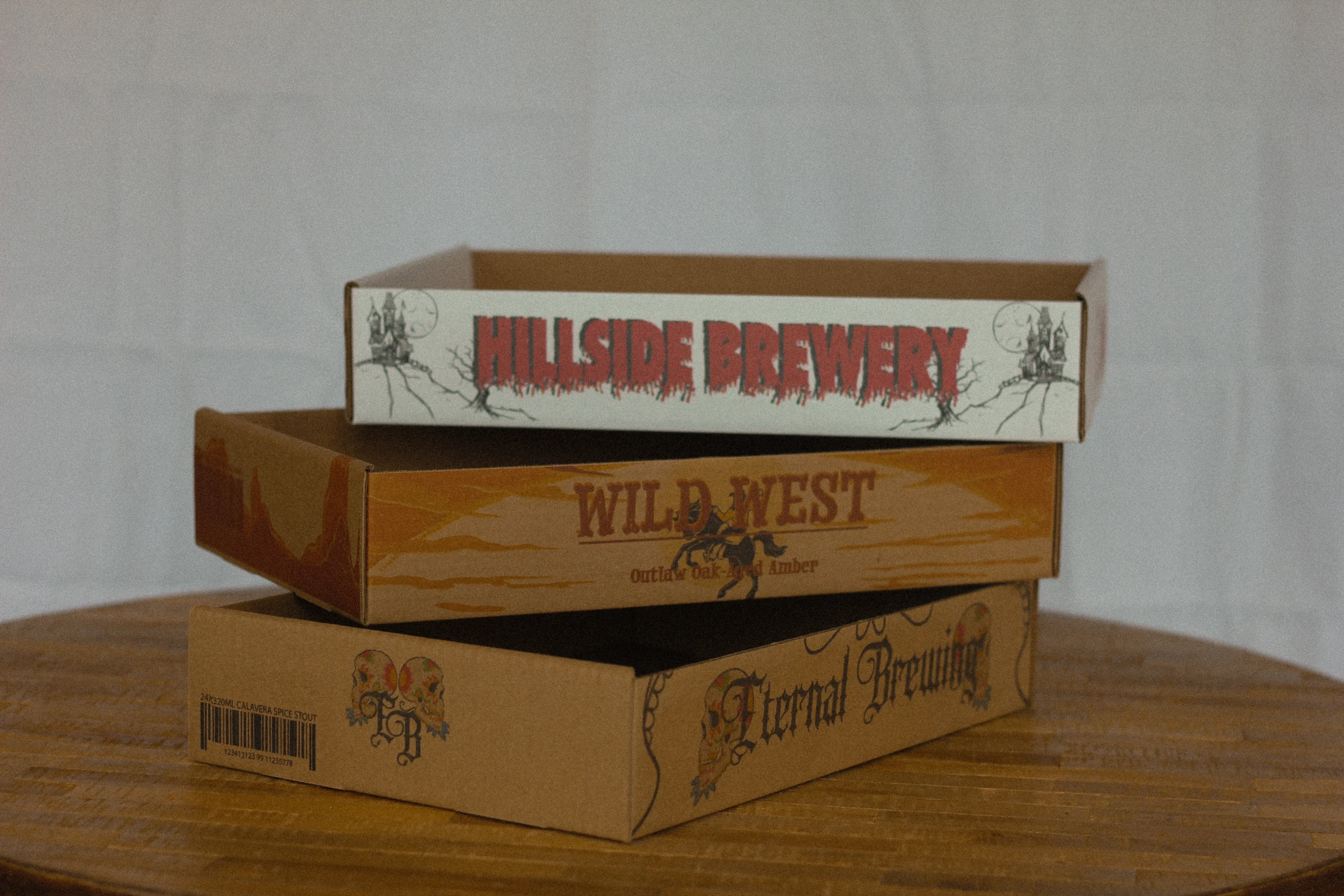
Sustainability is an important consideration for businesses developing custom shipping boxes in Canada. However, sustainable shipping packaging should be evaluated through its complete performance rather than material appearance alone.
Effective packaging design can consider material efficiency, product protection, package dimensions, internal components, transportation requirements, and realistic end-of-life conditions.
Fibre-Based Shipping Packaging
Corrugated shipping boxes use fibre-based materials and can be relevant to businesses evaluating paper-based packaging alternatives.
Recyclable Corrugated Materials
Many clean corrugated shipping boxes can be recycled through appropriate collection systems.
Actual recyclability may depend on coatings, contamination, adhesives, additional packaging components, and local recovery requirements.
Right-Sized Packaging
Right-sized custom shipping boxes Canada solutions may help reduce unnecessary packaging volume while maintaining sufficient product protection.
Reducing Unnecessary Material
Packaging development can identify corrugated material, protective components, or structural features that may be unnecessary for the intended application.
Corrugated Alternatives to Certain Plastic Inserts
Product-specific corrugated inserts may provide alternatives to certain plastic protective components where the required performance can be achieved.
Material substitution should be evaluated according to the actual protection requirements of the product.
Reducing Mixed-Material Components
Packaging structures that use fewer unnecessary material combinations may simplify separation and recovery in appropriate recycling systems.
Protecting Products to Prevent Waste
Reducing packaging material should not come at the expense of product protection.
Damaged products can create additional waste, replacement shipments, and further packaging consumption.
For businesses investing in sustainable custom shipping boxes Canada, the objective should be to balance material efficiency with appropriate transportation performance.
Sustainable Shipping Packaging Principles
Protect
Maintain appropriate product protection.
Right-Size
Reduce unnecessary package volume.
Optimize
Evaluate material and distribution efficiency.
Recover
Consider realistic recycling and recovery conditions.
Designing Custom Shipping Boxes for Canadian Distribution
Effective custom shipping boxes Canada businesses can rely on begin with understanding the product, its protection requirements, and its complete distribution journey. Norlands develops custom corrugated shipping packaging for e-commerce brands, manufacturers, retailers, wholesalers, and industrial businesses by combining product-specific dimensions, structural packaging design, appropriate corrugated board strength, protective inserts, custom dividers, heavy-duty shipping cartons, and branded printing.
A product-first approach to custom shipping boxes Canada can help reduce unnecessary package volume, optimize dimensional weight, minimize protective filler, improve packing consistency, and support more efficient warehouse operations and palletized distribution without compromising required product protection.
Explore Norlands’ custom shipping boxes, corrugated packaging, structural design, printing, and prototyping capabilities, connect with the Norlands team to discuss your product specifications, order quantities, and transportation requirements, or request a custom quote for custom shipping boxes Canada designed around your products, fulfillment operations, and distribution needs.
Canadian businesses operate across a wide range of distribution environments, from local deliveries within Vancouver and the Lower Mainland to interprovincial shipments and long-distance commercial freight transportation.
Custom shipping boxes Canada solutions should therefore be developed around the actual distribution conditions rather than assuming that every shipment encounters the same requirements.
Local Deliveries
Local delivery operations may involve direct transportation between warehouses, businesses, retail stores, and customers.
Packaging should account for loading, unloading, product handling, and the specific delivery process.
British Columbia Distribution
Businesses distributing products throughout British Columbia may encounter different transportation distances, warehouse conditions, handling requirements, and environmental factors.
Custom shipping boxes can be evaluated around these regional distribution requirements.
Interprovincial Shipping
Products shipped between Canadian provinces may pass through several transportation and distribution stages.
Packaging specifications should account for the expected handling, stacking, and transportation conditions throughout the journey.
Long-Distance Transportation
Long-distance shipping can involve extended transportation periods, vibration, repeated handling, and changing environmental conditions.
Custom corrugated shipping boxes should be developed with these conditions in mind.
Parcel Handling Conditions
Parcel distribution networks can expose shipping cartons to multiple sorting and handling stages.
Appropriate structural design and internal product protection should be evaluated according to the actual shipping method.
Temperature and Moisture Considerations
Temperature changes, humidity, and moisture exposure can influence corrugated packaging performance.
Businesses sourcing custom shipping boxes in Canada should identify relevant environmental conditions when selecting packaging specifications.
Warehouse and Distribution Centre Requirements
Commercial packaging should support the operational requirements of warehouses and distribution centres, including stacking, palletization, product identification, storage, and material handling.
By considering these requirements before production, businesses can develop shipping packaging that aligns more closely with their distribution operations.
Custom Shipping Boxes Canada: Built Around Your Distribution Requirements
Whether products are shipped locally within British Columbia, distributed across Canadian provinces, or transported through commercial freight networks, shipping packaging should be evaluated according to the complete distribution journey.
The right shipping box is designed not only around what is inside it, but also around everything it encounters before reaching its destination.




No comment