
introduction
Shipping boxes within Canada play a direct role in how safely products move between provinces, warehouses, businesses, and customers. The right shipping box must do more than simply contain a product. It should protect the contents through handling, stacking, transportation, storage, and final delivery without creating unnecessary packaging or freight costs.
Canadian distribution can involve long routes, multiple handling stages, parcel networks, warehouses, loading docks, and changing environmental conditions. For this reason, businesses choosing shipping boxes within Canada need to consider box size, corrugated strength, product weight, internal protection, and shipping conditions together.
An oversized carton may require excessive void fill and increase dimensional shipping costs. A box that is too weak may crush during stacking or transportation. A box that fits too tightly may transfer impacts directly to the product. Effective shipping boxes within Canada balance protection with material and transportation efficiency.
This is especially important for e-commerce businesses, manufacturers, retailers, and distributors shipping products across British Columbia, Alberta, Ontario, Quebec, and other Canadian markets. Packaging that performs well on a short local route may not always be suitable for repeated handling or long-distance domestic distribution.
Packaging Insight:
The best shipping box is not automatically the strongest or smallest option. It is the box that provides enough structural protection while minimizing unused space, unnecessary material, and avoidable shipping costs.
Businesses sourcing shipping boxes within Canada may choose from standard corrugated cartons, mailer boxes, heavy-duty boxes, double-wall structures, custom shipping boxes, and specialty packaging. The correct option depends on what is being shipped and how the package will move through the supply chain.
This guide explains how to select shipping boxes within Canada based on product weight, dimensions, fragility, corrugated strength, dimensional efficiency, shipping conditions, industry requirements, sustainability, and total packaging cost.
What Should Businesses Know About Shipping Boxes Within Canada?
Businesses selecting shipping boxes within Canada should begin by understanding the complete distribution journey. Domestic shipping does not automatically mean low packaging risk. A package may move through several sorting facilities, conveyors, trucks, warehouses, loading areas, and delivery vehicles before reaching its final destination.
Every handling stage introduces different stresses. Boxes may experience compression from stacked cartons, vibration during transportation, impact during loading, abrasion against other packages, or moisture exposure around loading docks and warehouses.

Domestic Shipping Can Still Put Packaging Under Significant Stress
Products shipped domestically may travel hundreds or thousands of kilometres. A shipment from Vancouver to Toronto, for example, may experience far more handling than a local delivery within British Columbia.
Canadian parcel packaging guidance emphasizes that shipping containers should be strong enough to protect their contents throughout transportation, while fragile products should be stabilized with appropriate cushioning to limit movement. This reinforces the importance of selecting shipping boxes according to both product characteristics and the handling environment they will encounter.
For businesses using shipping boxes within Canada, packaging should therefore be designed for expected distribution conditions rather than assuming domestic shipping is automatically gentle.
| Shipping Condition | Packaging Risk | Packaging Response |
|---|---|---|
| Repeated Handling | Drops, impacts, and corner damage | Correct corrugated strength and internal protection |
| Long-Distance Transport | Vibration and product movement | Right-sized boxes and controlled void space |
| Warehouse Stacking | Compression and carton collapse | Appropriate board strength and stacking design |
| Seasonal Conditions | Humidity, moisture, and temperature changes | Material selection based on realistic shipping conditions |
Why Shipping Distance Is Only One Part of Packaging Risk
Distance matters, but it is only one part of the risk associated with shipping boxes within Canada. A shorter parcel shipment that passes through several automated sorting facilities may experience more impacts than a longer palletized shipment handled fewer times.
Businesses should also consider whether cartons will travel individually, as part of a palletized load, through parcel carriers, or within B2B freight networks. Each distribution method creates different requirements for box strength and internal protection.
Product fragility also changes the equation. A durable textile product may tolerate moderate carton movement, while electronics, glassware, precision components, or premium retail products may require inserts or additional cushioning.
Need packaging that fits your product, timeline, and budget?
Tell us what you’re packaging and we’ll help you find the right box style, material, and production path.

How the Right Shipping Box Supports Reliable Delivery
Well-designed shipping boxes within Canada help control movement, protect corners and surfaces, maintain stacking strength, and keep the package stable throughout transportation.
Right-sizing is equally important. When a carton closely matches the product and required cushioning, less empty space remains inside the package. This can reduce void fill, improve cube efficiency, and create more consistent loads.
Protection
Appropriate board strength and internal support reduce product damage.
Efficiency
Right-sized cartons reduce empty space and unnecessary packaging materials.
Shipping Performance
Stable boxes are easier to stack, handle, store, and transport through domestic networks.
Cost Control
Better packaging can reduce void fill, damage, replacement shipments, and dimensional inefficiency.
For Canadian businesses shipping regularly, the goal should be to create a repeatable packaging system rather than solving each shipment individually. Standardizing suitable shipping boxes within Canada can improve packing speed, purchasing, inventory management, and delivery consistency.
Shipping Boxes Within Canada: Choose the Right Packaging for Safe, Cost-Effective Delivery
Shipping boxes within Canada play a direct role in how safely products move between provinces, warehouses, businesses, and customers. The right shipping box must do more than simply contain a product. It should protect the contents through handling, stacking, transportation, storage, and final delivery without creating unnecessary packaging or freight costs.
Canadian distribution can involve long routes, multiple handling stages, parcel networks, warehouses, loading docks, and changing environmental conditions. For this reason, businesses choosing shipping boxes within Canada need to consider box size, corrugated strength, product weight, internal protection, and shipping conditions together.
An oversized carton may require excessive void fill and increase dimensional shipping costs. A box that is too weak may crush during stacking or transportation. A box that fits too tightly may transfer impacts directly to the product. Effective shipping boxes within Canada balance protection with material and transportation efficiency.
This is especially important for e-commerce businesses, manufacturers, retailers, and distributors shipping products across British Columbia, Alberta, Ontario, Quebec, and other Canadian markets. Packaging that performs well on a short local route may not always be suitable for repeated handling or long-distance domestic distribution.
Packaging Insight:
The best shipping box is not automatically the strongest or smallest option. It is the box that provides enough structural protection while minimizing unused space, unnecessary material, and avoidable shipping costs.
Businesses sourcing shipping boxes within Canada may choose from standard corrugated cartons, mailer boxes, heavy-duty boxes, double-wall structures, custom shipping boxes, and specialty packaging. The correct option depends on what is being shipped and how the package will move through the supply chain.
This guide explains how to select shipping boxes within Canada based on product weight, dimensions, fragility, corrugated strength, dimensional efficiency, shipping conditions, industry requirements, sustainability, and total packaging cost.
What Should Businesses Know About Shipping Boxes Within Canada?
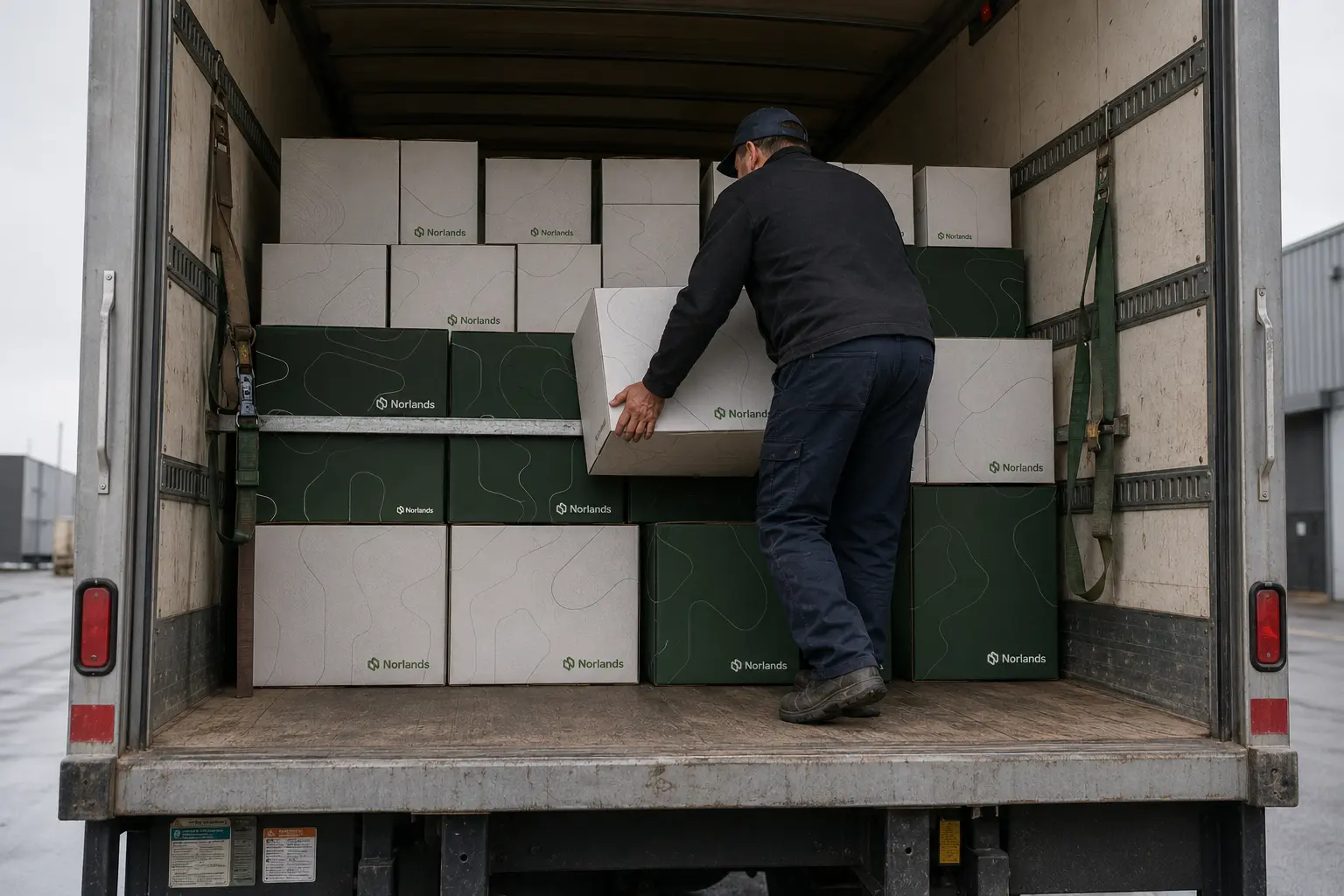
Businesses selecting shipping boxes within Canada should begin by understanding the complete distribution journey. Domestic shipping does not automatically mean low packaging risk. A package may move through several sorting facilities, conveyors, trucks, warehouses, loading areas, and delivery vehicles before reaching its final destination.
Every handling stage introduces different stresses. Boxes may experience compression from stacked cartons, vibration during transportation, impact during loading, abrasion against other packages, or moisture exposure around loading docks and warehouses.
Custom Made Boxes Canada: Tailored Packaging Solutions for Every Industry
Quick question:
You might also like
Domestic Shipping Can Still Put Packaging Under Significant Stress
Products shipped domestically may travel hundreds or thousands of kilometres. A shipment from Vancouver to Toronto, for example, may experience far more handling than a local delivery within British Columbia.
For businesses using shipping boxes within Canada, packaging should therefore be designed for expected distribution conditions rather than assuming domestic shipping is automatically gentle.
| Shipping Condition | Packaging Risk | Packaging Response |
|---|---|---|
| Repeated Handling | Drops, impacts, and corner damage | Correct corrugated strength and internal protection |
| Long-Distance Transport | Vibration and product movement | Right-sized boxes and controlled void space |
| Warehouse Stacking | Compression and carton collapse | Appropriate board strength and stacking design |
| Seasonal Conditions | Humidity, moisture, and temperature changes | Material selection based on realistic shipping conditions |
Why Shipping Distance Is Only One Part of Packaging Risk
Distance matters, but it is only one part of the risk associated with shipping boxes within Canada. A shorter parcel shipment that passes through several automated sorting facilities may experience more impacts than a longer palletized shipment handled fewer times.
Businesses should also consider whether cartons will travel individually, as part of a palletized load, through parcel carriers, or within B2B freight networks. Each distribution method creates different requirements for box strength and internal protection.
Product fragility also changes the equation. A durable textile product may tolerate moderate carton movement, while electronics, glassware, precision components, or premium retail products may require inserts or additional cushioning.
How the Right Shipping Box Supports Reliable Delivery
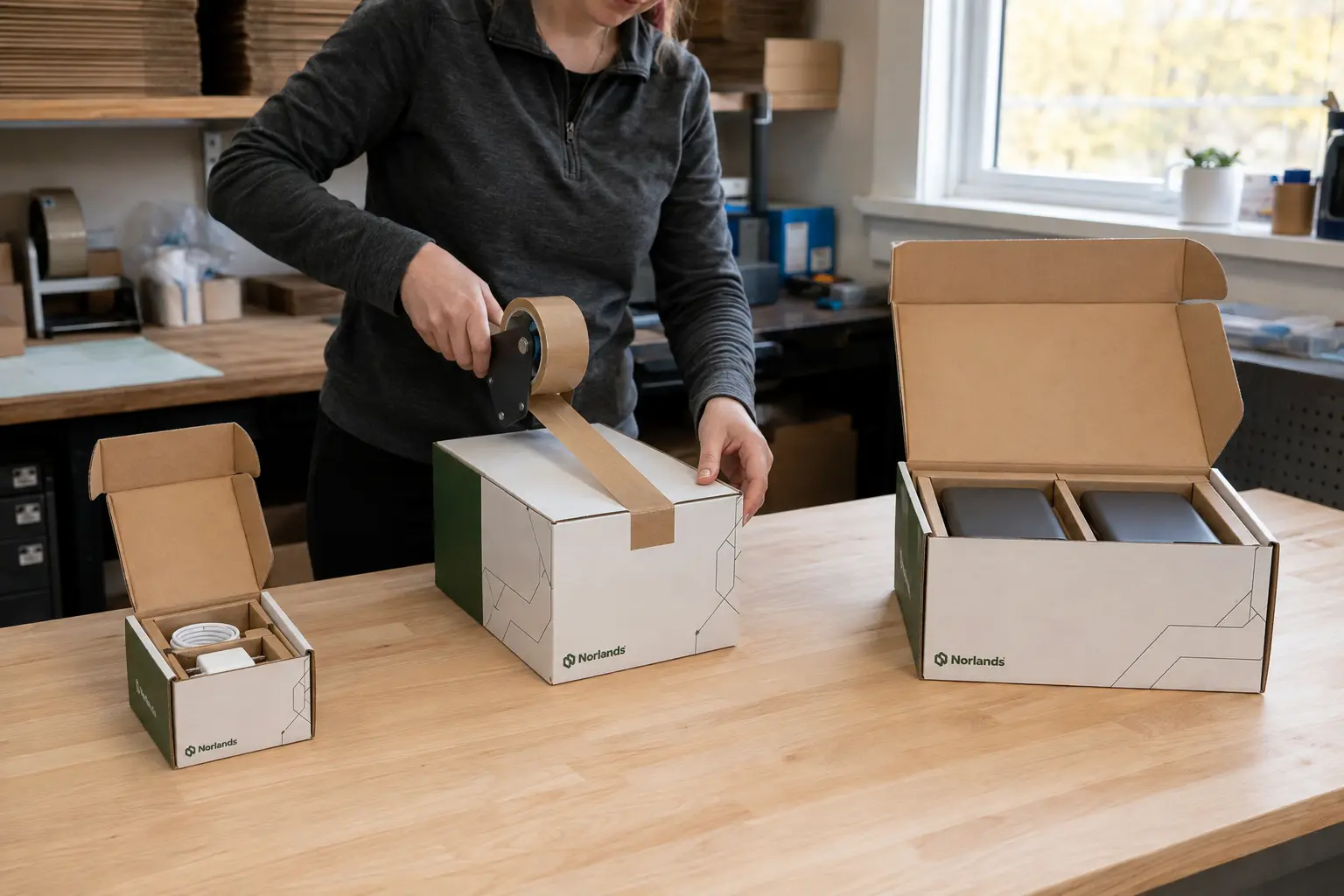
Well-designed shipping boxes within Canada help control movement, protect corners and surfaces, maintain stacking strength, and keep the package stable throughout transportation.
Right-sizing is equally important. When a carton closely matches the product and required cushioning, less empty space remains inside the package. This can reduce void fill, improve cube efficiency, and create more consistent loads.
Protection
Appropriate board strength and internal support reduce product damage.
Efficiency
Right-sized cartons reduce empty space and unnecessary packaging materials.
Shipping Performance
Stable boxes are easier to stack, handle, store, and transport through domestic networks.
Cost Control
Better packaging can reduce void fill, damage, replacement shipments, and dimensional inefficiency.
For Canadian businesses shipping regularly, the goal should be to create a repeatable packaging system rather than solving each shipment individually. Standardizing suitable shipping boxes within Canada can improve packing speed, purchasing, inventory management, and delivery consistency.
Frequently Asked Questions About Shipping Boxes Within Canada
What are the best shipping boxes within Canada?
The best shipping boxes within Canada depend on product weight, dimensions, fragility, shipping method, and handling conditions. Corrugated boxes are widely used because they provide a practical balance of strength, weight, and cost.
What size shipping box should I use?
Choose a box that provides enough room for the product and necessary cushioning without excessive empty space. Right-sized shipping boxes within Canada can reduce void fill and improve shipping efficiency.
Are corrugated boxes good for shipping across Canada?
Yes. Corrugated boxes are commonly used for domestic Canadian shipping because different board grades and constructions can support lightweight products, e-commerce orders, retail goods, and heavier commercial shipments.
When should I use double-wall shipping boxes?
Double-wall boxes are useful for heavier products, demanding distribution environments, higher stacking loads, and shipments requiring additional rigidity or puncture resistance.
Can shipping boxes within Canada be custom made?
Yes. Custom shipping boxes within Canada can be manufactured to specific dimensions, board strengths, printing requirements, and structural designs. Inserts and partitions can also be added for additional protection.
How can I reduce shipping costs with better boxes?
Right-sized packaging can reduce empty space, unnecessary cushioning, and dimensional inefficiency. Businesses should evaluate total packaging and shipping costs rather than box price alone.
Are shipping boxes recyclable in Canada?
Many corrugated shipping boxes within Canada are recyclable when they are clean and free from significant contamination. Local recycling requirements should always be followed.
What shipping boxes are best for e-commerce?
E-commerce businesses commonly use corrugated cartons and mailer boxes. The right choice depends on product size, fragility, branding requirements, and the parcel delivery environment.
Can I print my logo on shipping boxes?
Yes. Custom shipping boxes within Canada can include logos, brand colours, handling information, product details, and other printed graphics.
How do I choose a shipping box supplier in Canada?
Compare suppliers based on material quality, custom capabilities, printing options, production capacity, lead times, consistency, and support for recurring commercial orders.
Businesses relying on shipping boxes within Canada need packaging that can handle more than a single trip from point A to point B. From repeated carrier handling and warehouse stacking to long-distance transportation and final delivery, the right packaging should protect products while keeping material use, dimensional weight, and fulfilment costs under control. Norlands provides shipping boxes within Canada, including right-sized corrugated boxes, custom shipping boxes, protective packaging solutions, and branded packaging designed for e-commerce, retail, manufacturing, and distribution operations.
Whether you need to improve product protection, reduce oversized packaging, or develop a more consistent packaging program for shipments across the country, explore Norlands’ packaging services and industry-specific solutions, connect with the Norlands team to discuss your shipping requirements, or request a custom quote for shipping boxes within Canada designed around your products and distribution network.
Conclusion: Choosing Better Shipping Boxes Within Canada
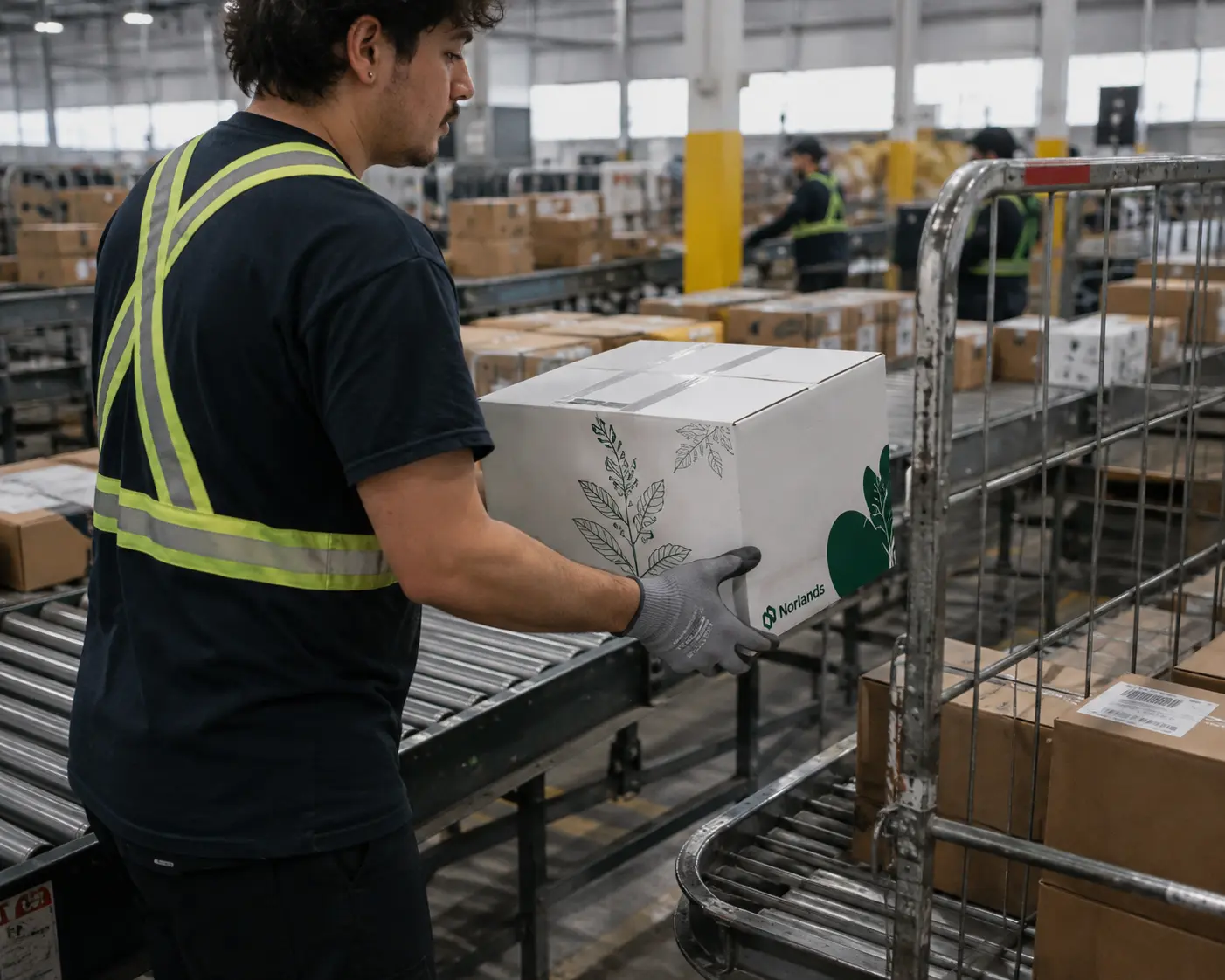
Shipping boxes within Canada should protect products while supporting efficient packing, storage, transportation, and delivery. Choosing the right box requires balancing product dimensions, weight, fragility, corrugated strength, internal protection, and distribution conditions.
Businesses should avoid selecting packaging based only on the lowest box price. Right-sized shipping boxes within Canada can reduce unnecessary materials, improve product protection, simplify fulfilment, and help control shipping costs.
For companies shipping products regularly, standardized or custom shipping boxes within Canada can create a more reliable packaging system. The right packaging helps products arrive safely while supporting efficient operations and a consistent customer experience.
Ultimately, selecting high-quality shipping boxes within Canada is about finding the right balance between protection, material use, shipping performance, and cost.





No comment