
Introduction
Searching for BC Box House usually means you are looking for corrugated boxes, moving cartons, shipping supplies, or a dependable packaging supplier in British Columbia. For many buyers, the main goal is not simply to find one company. It is to compare available packaging products, understand differences in box strength and customization, and determine which supplier can support the specific requirements of a home move, retail operation, manufacturing facility, or growing e-commerce business.
BC Box House may appear during searches for standard cardboard boxes, packaging supplies, shipping boxes, and moving products in British Columbia. However, choosing the right packaging partner requires a broader comparison. Box dimensions, corrugated construction, production capacity, lead times, pricing, minimum order quantities, and customer support can all influence the final value of a packaging purchase.
A standard stock box may be the best option when a business needs packaging immediately and can work with common dimensions. Custom corrugated packaging may offer greater value when products require precise sizing, stronger protection, printed branding, structural inserts, or a packaging system designed for repeated commercial use.
This guide uses BC Box House as a starting point for comparing packaging suppliers across Vancouver and British Columbia. It explains the types of packaging products buyers commonly need, the differences between stock and custom boxes, the questions businesses should ask before ordering, and the local alternatives available for companies with specialized packaging requirements.
Buyer’s Perspective:
When comparing BC Box House with another packaging supplier in BC, focus on the complete packaging solution rather than the price of one box. Material quality, box strength, order quantity, printing, delivery, storage, and technical support can have a major impact on long-term packaging costs.
The packaging needs of a homeowner are very different from those of a manufacturer. A person preparing for a residential move may need a practical mix of small, medium, and large moving cartons. An e-commerce company may need shipping boxes that balance product protection with dimensional efficiency. A food producer may require packaging that supports handling, stacking, presentation, and compliance with the intended product environment.
For this reason, a search for BC Box House should lead to a structured comparison rather than an automatic purchase. Buyers should identify what will be packed, how heavy the contents are, how the boxes will be handled, whether they will be stacked, and whether the packaging needs to communicate a brand.
What Is BC Box House?
BC Box House is a name buyers may encounter while searching for boxes, moving supplies, shipping products, or packaging services in British Columbia. People using this search term may be trying to identify a specific supplier, review available packaging products, compare prices, or determine whether the company can meet a custom packaging requirement.
From a buyer’s perspective, the most important issue is not only what BC Box House sells. The more useful question is whether its product range, service model, lead times, and box specifications match the actual packaging application.
A supplier focused on stock moving boxes may be highly suitable for a household relocation but less suitable for a manufacturer requiring custom dimensions and repeated production runs. A custom corrugated packaging manufacturer may provide stronger technical support but may require higher order quantities or a longer planning process.
Understanding these differences helps buyers evaluate BC Box House objectively alongside other packaging companies in Vancouver and across British Columbia.
Important:
The right packaging supplier is defined by application fit. A company that is ideal for moving boxes may not be the best partner for retail packaging, food packaging, industrial cartons, printed e-commerce boxes, or complex structural packaging.
Products and Services Buyers May Look for from BC Box House
Customers searching for BC Box House may expect to find a range of standard packaging products. Common requirements include cardboard boxes, corrugated cartons, shipping boxes, moving boxes, storage cartons, packing tape, cushioning materials, and other shipping supplies.
Business customers may also look for bulk ordering, custom sizes, printed packaging, corrugated inserts, packaging design support, or recurring supply programs. The availability of these services can vary significantly between a packaging distributor and a manufacturer.
| Packaging Category | Common Products | Typical Buyer |
|---|---|---|
| Moving Packaging | Small, medium, large, wardrobe, and specialty moving cartons | Homeowners, renters, movers, and storage customers |
| Shipping Packaging | Regular slotted cartons, mailers, protective inserts, and shipping supplies | E-commerce brands, retailers, distributors, and warehouses |
| Storage Packaging | Archive cartons, stackable storage boxes, and document boxes | Offices, households, record-storage facilities, and institutions |
| Custom Corrugated Packaging | Custom sizes, printed boxes, structural inserts, and industry-specific packaging | Manufacturers, food producers, retailers, and growing product brands |
Before choosing BC Box House or another supplier, buyers should confirm whether the company stocks finished boxes, manufactures packaging locally, or distributes products made elsewhere. This distinction can affect lead times, customization, minimum orders, and technical support.
A distributor may offer a broad catalogue of standard products with fast availability. A packaging manufacturer may provide more control over board grade, dimensions, printing, and structural design. Some companies combine both models.
Who Uses BC Box House?
The audience searching for BC Box House can include both individual and commercial buyers. Residential customers may need moving boxes and packing supplies, while businesses may be comparing packaging companies for shipping, storage, retail presentation, or industrial protection.
Because these applications are very different, each buyer should evaluate suppliers according to the actual packaging workflow rather than assuming that one product range is suitable for every use.
Residential Movers
Need affordable moving cartons, tape, protective wrap, and practical box sizes.
E-Commerce Businesses
Need reliable shipping boxes, efficient dimensions, branding, and damage reduction.
Retail Brands
Need packaging that protects products while supporting presentation and brand identity.
Manufacturers
Need consistent corrugated packaging, bulk supply, structural strength, and production reliability.
When a business searches for BC Box House, it may already know the general type of packaging it needs but may not know which specifications matter. A manufacturer, for example, may ask for a strong box without identifying the required board construction, weight capacity, stacking condition, or transport environment.
A capable packaging partner should help translate the application into measurable packaging requirements. That may include the product dimensions, packed weight, shipping method, pallet pattern, warehouse conditions, handling frequency, and expected order volume.
Packaging Products Available from BC Box House and Other BC Suppliers
The packaging market in British Columbia includes a wide variety of products, from simple cardboard boxes to engineered corrugated systems. Customers comparing BC Box House with another packaging supplier should first identify which product category best matches their needs.
Standard cartons are useful when common dimensions and moderate protection are sufficient. Specialty or custom products become more important when products are fragile, unusually shaped, heavy, branded, or shipped repeatedly through demanding distribution networks.
Moving Boxes
Moving boxes are among the most common products associated with searches for BC Box House. These cartons are intended for household goods, office contents, books, kitchenware, clothing, decorations, and other items that need temporary protection during relocation.
A balanced moving kit usually contains several box sizes. Small cartons are suitable for dense items such as books, dishes, tools, and files. Medium cartons are useful for general belongings, while large boxes should normally be reserved for lightweight goods such as pillows, bedding, and clothing.
Moving Box Rule:
Heavy belongings should be packed in smaller cartons. Lightweight and bulky belongings can use larger boxes. This improves handling and reduces the risk of bottom failure.
People comparing moving cartons from BC Box House should also check whether specialty boxes are available. Wardrobe cartons, picture boxes, mirror boxes, dish packs, and television boxes can provide better protection than standard rectangular cartons for difficult items.
Shipping Boxes
Shipping boxes are designed for product distribution rather than only household moving. Businesses comparing BC Box House with a box manufacturer in BC should evaluate shipping cartons according to product weight, carrier handling, stacking, dimensional efficiency, and the level of protection required.
An oversized shipping carton may appear flexible, but it can increase void fill, freight costs, and product movement. A carton that fits more closely around the product can improve stability and reduce packaging waste.
Packaging guidance also recommends selecting shipping cartons that closely match product dimensions while providing appropriate protection. Right-sized packaging can help improve shipping efficiency, reduce unnecessary cushioning, and support a more consistent customer delivery experience.
Shipping boxes may include regular slotted cartons, mailer boxes, die-cut cartons, return-ready packaging, and multi-product shipping configurations. E-commerce brands may also require printed packaging that creates a more professional unboxing experience.
Storage Boxes
Storage cartons are used for household items, files, records, seasonal inventory, and archived materials. Buyers searching for BC Box House may need boxes that remain stacked for longer periods than ordinary moving cartons.
For storage, compression strength and moisture conditions become especially important. Boxes should remain square, dry, and properly aligned. Heavy cartons should be positioned at the bottom, and cardboard should not be placed directly on damp concrete surfaces.
Archive boxes can be particularly useful for documents because they provide consistent dimensions, easier labelling, and convenient access. Businesses storing records should compare lid design, carrying features, stacking performance, and box strength before purchasing.
Corrugated Cartons
Corrugated cartons are used across moving, shipping, storage, retail, food, manufacturing, and distribution. When comparing corrugated products from BC Box House with other suppliers, buyers should not judge strength by appearance alone.
Corrugated performance depends on the linerboard, flute structure, wall construction, dimensions, manufacturing quality, and the conditions the box will experience. Single-wall cartons may be suitable for many general applications, while double-wall structures may be preferable for heavier products or demanding stacking requirements.
| Box Type | Common Application | Main Selection Factor |
|---|---|---|
| Moving Carton | Residential and office relocation | Manageable weight and mixed sizing |
| Shipping Carton | Parcel and freight distribution | Product protection and dimensional efficiency |
| Storage Box | Longer-term household or business storage | Compression strength and dry storage |
| Custom Corrugated Box | Commercial products and specialized applications | Precise sizing, structure, printing, and inserts |
Customers reviewing BC Box House products should ask for enough technical information to make a meaningful comparison. Box dimensions alone do not explain how a carton will perform under load, during palletization, or through repeated handling.

How to Compare BC Box House with Other Packaging Suppliers
Comparing BC Box House with other packaging suppliers in British Columbia requires more than checking whether a company sells cardboard boxes. Buyers should evaluate the complete relationship between product quality, technical support, lead times, pricing, customization, and supply reliability.
A supplier may offer a broad range of stock boxes but limited support for custom projects. Another may specialize in engineered corrugated packaging but require larger order quantities. The best choice depends on how frequently the packaging will be used, how much protection the product needs, and whether the buyer values immediate availability or a more tailored solution.
For residential customers, convenience and price may be the most important factors. For commercial buyers comparing BC Box House with another packaging company in Vancouver, consistency, production capacity, material performance, and ongoing service may matter more.
Comparison Principle:
Do not compare BC Box House and other suppliers only by unit price. Compare the total cost of packaging, including product damage, assembly time, storage space, freight efficiency, reordering, and customer support.
Product Quality
Product quality should be one of the first criteria used to compare BC Box House with another packaging supplier in BC. A box may look acceptable when empty but perform poorly once it is filled, stacked, or exposed to repeated handling.
Consistent dimensions, clean scoring, accurate slots, strong adhesive joints, and square construction all contribute to reliable carton performance. Poorly manufactured boxes may be difficult to assemble, may not stack evenly, or may create unnecessary pressure points around the packed product.
For businesses, quality consistency is especially important. If one production batch performs differently from the next, packaging lines may experience delays, product fit may change, and staff may need to compensate with extra tape or cushioning.
Box Strength
Box strength is another critical factor when evaluating BC Box House against other corrugated box suppliers. Strength should match the packed weight, stacking requirements, storage duration, and transportation conditions.
Single-wall corrugated cartons may be appropriate for many moving, retail, and e-commerce applications. Heavier products or demanding pallet loads may require double-wall board, reinforced corners, stronger paper grades, or a more efficient structural design.
Buyers should avoid assuming that a thicker-looking box is automatically stronger. Corrugated performance depends on the complete board construction and the direction of the load. A poorly sized carton can also fail even when the material itself is strong.
| Performance Factor | Why It Matters | Question to Ask |
|---|---|---|
| Packed Weight | Affects bottom strength and safe handling. | What load is the carton designed to support? |
| Stacking Height | Determines compression pressure on lower boxes. | Will the carton remain stable in a pallet stack? |
| Handling Conditions | Repeated movement increases edge and panel stress. | How many times will the box be handled? |
| Storage Environment | Humidity and moisture can reduce corrugated strength. | Will the box be stored in dry, controlled conditions? |
When reviewing box specifications from BC Box House, buyers should request clear guidance on suitable applications rather than relying on general descriptions such as “heavy-duty.” A useful supplier should be able to explain why a specific carton is appropriate for the intended load.
Material Options
Material options can vary considerably between BC Box House and other packaging suppliers in British Columbia. Common choices may include standard kraft corrugated board, white-top liners, recycled-content materials, moisture-resistant treatments, and different flute profiles.
The right material depends on the product and supply chain. A retail box may prioritize appearance and printing, while an industrial carton may prioritize compression strength and puncture resistance. Food and produce packaging may require additional attention to moisture, ventilation, and handling conditions.
Businesses should also ask whether the supplier can recommend material reductions without reducing performance. Over-specifying board can increase cost and material use, while under-specifying it can lead to damage and waste.
Material Optimization:
The best packaging is not always the heaviest box. It is the lightest structure that can safely protect the product through packing, storage, shipping, and delivery.
Lead Times
Lead time is particularly important for commercial buyers comparing BC Box House with a packaging manufacturer or distributor. Stock boxes may be available immediately, while custom products require time for design, approval, material planning, printing, and production.
Businesses should ask whether stated lead times begin when a quote is accepted, when artwork is approved, or when final specifications are confirmed. Delays often occur because one side assumes production has started while technical details are still unresolved.
Recurring customers may benefit from forecast-based ordering, scheduled production, or supplier-managed inventory. These arrangements can reduce emergency purchases and help avoid packaging shortages during seasonal demand.
Stock Availability
Best for urgent orders and common box dimensions.
Custom Production
Requires planning but provides better fit and performance.
Repeat Orders
Can become faster when specifications and tooling are already approved.
Seasonal Planning
Helps businesses prepare before demand, promotions, or production peaks.
Customer Support
Customer support can distinguish a basic box seller from a long-term packaging partner. Buyers comparing BC Box House with another supplier should evaluate how quickly questions are answered and how well the team understands packaging applications.
For a simple moving box purchase, basic product guidance may be enough. For a commercial packaging program, support may need to include structural recommendations, sample development, artwork coordination, material selection, cost optimization, and troubleshooting.
A responsive supplier should identify risks before production. For example, it should question an oversized design, an unsuitable material, weak stacking assumptions, or artwork that may not reproduce well on corrugated board.
Custom Packaging vs Standard Stock Boxes
One of the most important decisions for buyers searching for BC Box House is whether to purchase standard stock boxes or invest in custom packaging. Both options can be effective when used for the right application.
Stock boxes are already manufactured in common dimensions and are typically faster to obtain. Custom packaging is created around a product, process, or brand and can provide better protection, efficiency, and presentation.
| Factor | Standard Stock Boxes | Custom Packaging |
|---|---|---|
| Availability | Often available quickly | Requires design and production time |
| Product Fit | Based on existing dimensions | Designed around the product |
| Branding | Usually plain or generic | Can include custom print and graphics |
| Minimum Quantity | Often suitable for small orders | May require production minimums |
| Operational Efficiency | May require extra void fill or adjustment | Can improve packing, storage, and shipping efficiency |
When Standard Boxes Work Best
Standard boxes are often the most practical option for customers using BC Box House for moving, storage, low-volume shipping, or short-term projects. They can be purchased in small quantities and used without a design or development process.
Stock boxes work well when products fit common dimensions, branding is not essential, and immediate availability is more important than structural optimization. They are also useful for businesses testing a product before committing to a custom packaging run.
However, buyers should still avoid choosing a stock carton that is much larger than the product. Excess empty space can increase cushioning requirements, reduce pallet efficiency, and raise shipping costs.
Stock Box Advantage:
Standard cartons are usually best when order quantities are low, speed matters, product dimensions are flexible, and the packaging does not need specialized printing or protection.
When Custom Packaging Adds Value
Custom packaging becomes more valuable when the limitations of standard boxes begin to create recurring costs. Businesses comparing BC Box House with a custom packaging manufacturer should examine whether poor fit, excessive filler, product damage, or inefficient packing is affecting operations.
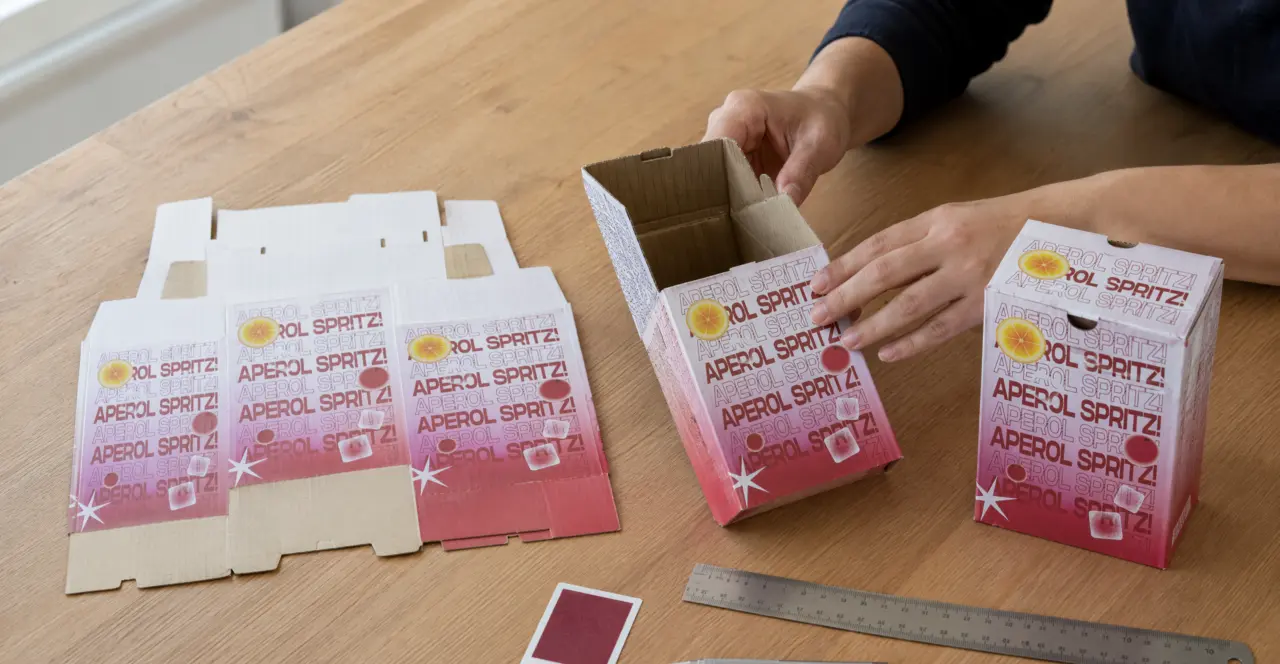
A custom corrugated box can be designed to fit the product more closely, reduce internal movement, support inserts, and align with pallet or shelf dimensions. It can also include printed branding, handling instructions, product information, or retail graphics.
Custom packaging may also improve labour efficiency. A carton with a self-locking base, integrated divider, or easy-open feature can reduce assembly time and simplify fulfilment.
Choosing the Right Packaging for Your Business
Businesses comparing BC Box House with other packaging suppliers should choose boxes according to their industry, product type, shipping environment, and customer expectations. The same carton specification will not perform equally well across retail, food, manufacturing, and e-commerce applications.
Retail Packaging
Retail packaging must protect the product while supporting presentation, shelf visibility, and brand identity. A business comparing BC Box House with a packaging manufacturer should determine whether it needs plain shipping cartons, printed retail boxes, display-ready packaging, or a combination of all three.
Printed corrugated packaging can support brand recognition while still providing shipping strength. Businesses should confirm print limitations, colour expectations, artwork requirements, and whether a physical sample will be produced before a full order.
Food Packaging
Food packaging requires careful evaluation because product conditions vary widely. A bakery box, produce carton, meal-kit shipper, and frozen food case each have different protection and handling requirements.
When comparing BC Box House with food packaging suppliers in British Columbia, buyers should discuss moisture, ventilation, temperature exposure, direct or indirect food contact, stacking, and delivery time.
Food Packaging Question:
Ask whether the proposed material and structure are suitable for the actual product environment, including moisture, refrigeration, ventilation, grease, and delivery conditions.
Manufacturing
Manufacturers often require packaging that protects heavy, valuable, or precisely made products through warehousing and distribution. Standard products from BC Box House may work for general parts, but specialized components may require custom corrugated structures, dividers, foam, or reinforced board.
Manufacturing packaging should be evaluated alongside production flow. Boxes must arrive in the correct quantity, assemble efficiently, fit storage areas, and support palletization. Inconsistent supply can interrupt production even when the carton itself performs well.
Businesses should also examine whether packaging can be standardized across multiple product sizes. A well-designed family of boxes may reduce the total number of SKUs while still protecting different products.
E-Commerce
E-commerce packaging must survive parcel handling while remaining cost-efficient and easy for customers to open. Companies comparing BC Box House with e-commerce packaging suppliers should focus on box fit, closure method, return usability, branding, and dimensional weight.
An oversized box can increase shipping costs and make a small product appear poorly packed. A box that is too tight may transfer impacts directly to the product. The best design provides enough protective space without excessive empty volume.
| Industry | Primary Packaging Goal | Common Solution |
|---|---|---|
| Retail | Protection and shelf presentation | Printed cartons and display-ready boxes |
| Food | Freshness, handling, and delivery performance | Product-specific corrugated food packaging |
| Manufacturing | Strength and operational consistency | Heavy-duty cartons and protective inserts |
| E-Commerce | Parcel protection and dimensional efficiency | Right-sized mailers and shipping cartons |
Frequently Asked Questions About BC Box House

Buyers searching for BC Box House often want to understand what types of boxes may be available, whether custom packaging is an option, and how the company compares with other packaging suppliers in British Columbia. The following questions provide a practical framework for evaluating BC Box House and similar packaging companies before placing an order.
What is BC Box House?
BC Box House is a name buyers may encounter while searching for boxes, packaging products, moving supplies, or corrugated packaging services in British Columbia. Before ordering, customers should confirm the current product range, service area, customization capabilities, minimum quantities, and lead times directly with the supplier.
Does BC Box House sell moving boxes?
People searching for BC Box House commonly look for moving boxes and related packing supplies. Buyers should confirm which small, medium, large, wardrobe, dish, mirror, or specialty moving cartons are currently available and whether products can be purchased individually or in larger quantities.
Does BC Box House offer custom packaging?
Customization can vary between packaging suppliers. Businesses comparing BC Box House with custom box manufacturers should ask whether the company provides custom dimensions, printed corrugated boxes, structural design, prototypes, inserts, and recurring production programs.
Where can I buy corrugated boxes in BC?
Corrugated boxes are available from packaging manufacturers, distributors, moving supply companies, shipping supply retailers, and local box companies across British Columbia. Buyers comparing these options with BC Box House should evaluate stock availability, order quantities, strength specifications, delivery, and customization.
What types of packaging products are available in British Columbia?
Common packaging products include moving boxes, shipping cartons, storage boxes, mailers, archive cartons, retail packaging, industrial boxes, packing tape, cushioning materials, corrugated inserts, and custom printed packaging. The exact selection available from BC Box House or another supplier should be confirmed before purchasing.
How do I choose a packaging supplier?
Choose a packaging supplier by comparing product quality, material specifications, box strength, lead times, minimum order quantities, customization, delivery, technical support, and production reliability. Buyers should compare the total packaging cost rather than only the price per box.
What is the difference between stock and custom boxes?
Stock boxes are manufactured in standard dimensions and are often available quickly in smaller quantities. Custom boxes are designed around a specific product, process, or brand. Customers comparing stock products from BC Box House with custom packaging should consider fit, order volume, branding, protection, and shipping efficiency.
Are corrugated boxes recyclable?
Many corrugated boxes can be recycled when they are clean, dry, flattened, and free from excessive contamination. Tape, labels, coatings, food residue, moisture damage, and mixed-material components can affect local recycling requirements, so buyers should follow the rules of their municipal recycling program.
Can businesses order packaging in bulk?
Many packaging distributors and manufacturers support bulk box orders. Businesses comparing bulk options with BC Box House should ask about price breaks, minimum quantities, pallet quantities, delivery schedules, inventory programs, and whether recurring orders can be planned in advance.
What industries use corrugated packaging?
Corrugated packaging is used in retail, food production, manufacturing, e-commerce, logistics, agriculture, pharmaceuticals, consumer goods, warehousing, and commercial distribution. Each industry requires different box specifications based on product weight, moisture, handling, stacking, branding, and shipping conditions.
Is a local box manufacturer better than a packaging distributor?
Neither model is automatically better. A distributor may offer fast access to a broad stock catalogue, while a local manufacturer may provide greater control over dimensions, materials, printing, and structural design. Buyers comparing a manufacturer with BC Box House should choose according to their order volume and technical requirements.
How important is box strength?
Box strength affects lifting, stacking, storage, and transportation performance. Customers evaluating cartons from BC Box House should match the box specification to the packed weight, pallet height, handling frequency, humidity, and distribution environment.
Can custom packaging reduce shipping costs?
Custom packaging may reduce shipping costs when it eliminates unnecessary empty space, improves pallet efficiency, reduces void fill, or lowers dimensional weight. The result depends on carrier pricing, order volume, product dimensions, and the cost of producing the custom box.
Do packaging suppliers provide printed boxes?
Some packaging suppliers offer printed corrugated boxes, while others focus mainly on plain stock products. Businesses comparing printing services with BC Box House should ask about print methods, colour limitations, artwork setup, plate or tooling charges, order minimums, and proofing.
What are the advantages of buying boxes from a local BC supplier?
A local packaging supplier may provide faster communication, shorter transportation distances, easier sampling, local delivery, and closer collaboration on custom projects. However, buyers should still compare pricing, capacity, quality, lead times, and technical support.
Choosing the right packaging supplier is about more than finding a company that sells boxes—it’s about working with a partner that understands your products, production process, shipping requirements, and long-term business goals. Whether you need stock corrugated boxes for immediate use, custom packaging engineered around your products, printed packaging for stronger brand recognition, or scalable packaging solutions for manufacturing, retail, food, e-commerce, and distribution, the right packaging strategy can improve product protection, operational efficiency,
and customer experience. Businesses looking to compare packaging options, develop custom corrugated packaging, or build a reliable long-term packaging supply program can explore Norlands’ packaging services and industry-specific solutions, connect with the Norlands team for expert packaging guidance, or request a custom packaging quote tailored to their products, operations, and future growth.
Conclusion: Compare BC Box House Before Choosing a Packaging Supplier
A search for BC Box House can be a useful starting point for finding moving boxes, shipping cartons, storage products, and corrugated packaging in British Columbia. However, the best packaging decision rarely comes from selecting the first available supplier or comparing only the price of one carton.
Residential customers may prioritize convenient access to moving boxes and packing supplies. Commercial buyers need to evaluate a broader range of factors, including production consistency, material quality, box strength, minimum order quantities, lead times, customization, printing, delivery, and customer support.
When comparing BC Box House with another packaging supplier in BC, begin by defining the application. Identify what the box will hold, the packed weight, product dimensions, shipping method, stacking conditions, storage environment, branding requirements, and expected annual volume.
This information makes it easier to determine whether a standard stock box is sufficient or whether a custom corrugated solution would provide better long-term value.
Standard products from BC Box House or another packaging distributor may be entirely suitable for moving, storage, office relocation, and general shipping. Stock boxes are often easier to purchase in small quantities and can provide a practical solution when speed matters.
Custom corrugated packaging becomes more useful when a business ships the same product repeatedly, experiences frequent damage, uses excessive cushioning, or pays unnecessary freight charges because of oversized cartons. A custom box can improve product fit, packing speed, brand presentation, storage efficiency, and pallet utilization.
| Buyer Requirement | Packaging Option to Compare | Main Benefit |
|---|---|---|
| Immediate box availability | Stock boxes from BC Box House or another distributor | Faster purchasing for common requirements |
| Small moving or storage project | Standard moving and storage cartons | Flexible quantities and practical sizing |
| Recurring product shipments | Custom corrugated shipping boxes | Improved fit and operational consistency |
| Retail or e-commerce branding | Printed custom packaging | Stronger presentation and customer experience |
| Heavy or fragile products | Engineered cartons with protective inserts | Greater stability and product protection |
Local manufacturing is another important factor. A packaging manufacturer in British Columbia may provide more direct control over box specifications, structural design, printing, and production planning. This can be valuable for businesses that need consistent packaging across repeated orders.
A distributor may still be the better choice when a buyer requires a variety of standard packaging products in smaller quantities. The decision between BC Box House, a packaging distributor, and a custom manufacturer should therefore be based on application fit rather than company type alone.
Buyers should also consider the supplier’s ability to support future growth. A small business may begin with stock shipping boxes but later require branded packaging, larger order volumes, multiple box sizes, or inventory support. Selecting a packaging partner with scalable capabilities can reduce the need to restart the sourcing process as demand increases.
For buyers searching for BC Box House, this means looking beyond basic availability and considering how each packaging option affects product safety, labour, storage, shipping, branding, and customer experience.
By comparing standard stock boxes, bulk packaging products, local corrugated manufacturers, and custom packaging solutions, households and businesses can select packaging that performs reliably and supports their actual needs throughout British Columbia.




No comment